Luxury white marble is often chosen for its clean colour, natural veining and sophisticated appearance. But the final look of a marble wall does not depend on the stone alone. Lighting can completely change how white marble looks throughout the day.
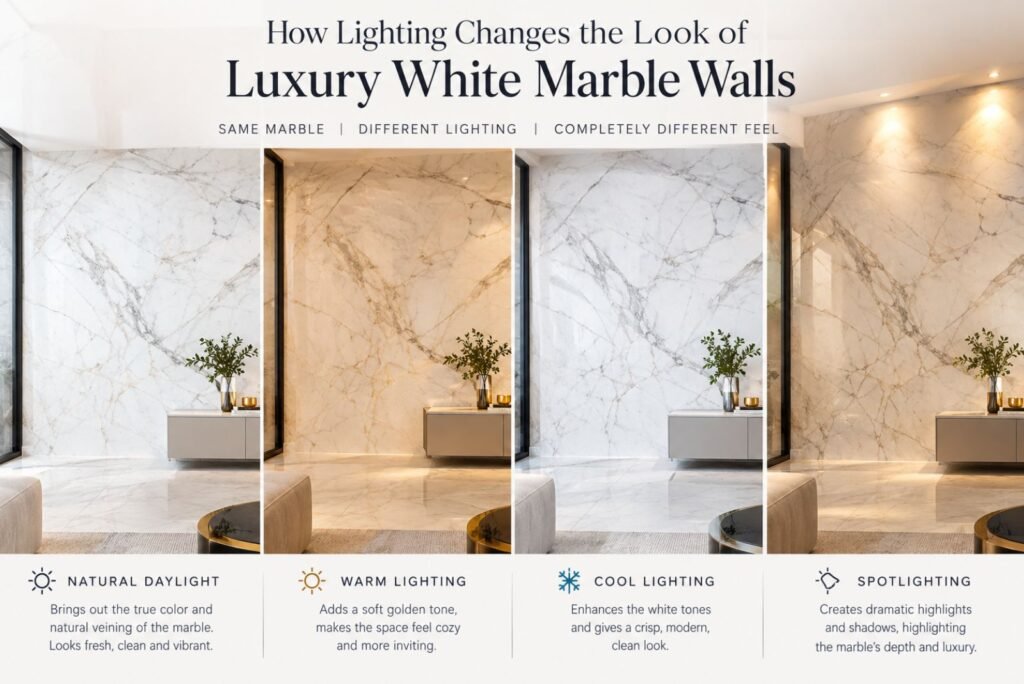
The same Statuario marble wall may appear bright and crisp under daylight, warm and elegant under soft lighting, or dramatic when illuminated from a particular angle. This is why lighting should be considered alongside marble selection rather than treated as a finishing detail.
For homeowners, architects and interior designers choosing Statuario Marble in Kishangarh, imported marble or other premium white stones, understanding this relationship can make a significant difference to the finished space.
Why White Marble Responds So Well to Light
White marble has a naturally reflective surface. Depending on its finish, thickness, colour and mineral structure, it can interact with both natural and artificial light in different ways.
Veins may become more prominent under directional lighting, while diffused illumination can create a softer appearance. Polished surfaces generally reflect more light, whereas honed finishes produce a quieter, more muted effect.
This is particularly noticeable with luxury varieties such as:
- Statuario Marble
- italian Carrara Marble
- Volakas Marble
- Michelangelo Marble
- Calacatta Gold Marble
- Thassos White Marble
- Dover White Marble
Although all of these stones can create an elegant white-marble interior, their individual veining and background characteristics react differently to the lighting environment.
Daylight Can Reveal the Natural Character of Marble
Natural daylight is one of the most useful ways to understand how a marble wall will actually look in a home.
A large window can make a white marble surface feel open and spacious. Morning light may bring out subtle grey veining, while stronger afternoon light can make the background appear brighter.
For a wall receiving plenty of daylight, designers should examine the actual slab rather than selecting marble solely from a small sample. The direction of the veins, surface finish and surrounding colours can all influence the visual result.
This is especially important when selecting italian marble in Kishangarh for large feature walls, entrance areas or luxury living spaces.
Warm Lighting Creates a Softer Marble Appearance
Warm white lighting can give white marble a more intimate and comfortable appearance.
This approach works particularly well in:
- Living rooms
- Dining areas
- Hotel lounges
- Bedrooms
- Private residences
- Luxury reception spaces
A marble with grey veining may appear softer under warm illumination, while stones with warmer or golden details can develop a richer visual character.
For example, Calacatta Gold Marble can respond beautifully to carefully positioned warm lighting because the illumination can complement its warmer veining without overpowering the natural stone.
Cool Lighting Makes White Marble Look Crisp
Cool or neutral white lighting generally creates a cleaner and sharper appearance.
It can work well in contemporary interiors where the intention is to highlight:
- Crisp white backgrounds
- Grey marble veins
- Minimalist architecture
- Clean geometric lines
- Large wall surfaces
This can be particularly effective with Statuario Marble, where directional or neutral illumination can make the natural veining visually stronger.
However, extremely harsh lighting may make a space feel clinical. The goal should be to reveal the marble rather than flood it with excessive brightness.
Wall-Washing Can Highlight Marble Veins
Wall-washing is one of the most effective lighting techniques for marble feature walls.
Instead of placing a bright light directly in front of the stone, fixtures are positioned to spread light across the surface. This can create a gentle gradient and help reveal the natural movement of the marble.
For highly veined stones, the effect can be dramatic without looking artificial.
The technique is particularly useful when a large marble wall is intended to become the main visual element of an entrance lobby, staircase or living room.
Backlighting Creates a Completely Different Effect
Some translucent natural stones can produce striking results when illuminated from behind.
However, not every marble is suitable for backlighting. Thickness, translucency, slab structure and installation technique all need to be assessed before planning this type of application.
For projects considering premium imported marble in Kishangarh, it is better to discuss the intended lighting concept with the marble supplier and designer before fabrication begins.
The Marble Finish Also Matters
Lighting does not interact with every marble finish in the same way.
Polished Marble
A polished surface reflects more light and can make a room feel brighter and more luxurious. It can also produce reflections from spotlights or decorative fixtures.
Honed Marble
Honed marble has a softer appearance and generally reduces the strong reflections associated with polished surfaces. It can be a good option for interiors where a more understated luxury is desired.
Brushed or Textured Finishes
Textured finishes can create shadows across the stone surface. When combined with directional lighting, these small changes in surface depth can add considerable visual interest.
Avoid Placing Strong Spotlights Directly on the Marble
One common mistake is using powerful spotlights aimed straight at a polished marble wall.
Instead of highlighting the natural beauty of the stone, this can create bright reflections and uneven visual spots.
A better approach is to consider the complete wall:
marble selection + slab layout + surface finish + light colour + fixture position + surrounding materials.
These elements should work together.
Bookmatching and Lighting Need to Be Planned Together
If a project uses bookmatched marble slabs, lighting becomes even more important.
Bookmatching creates a mirrored composition from two adjoining slabs. When the lighting is properly positioned, the continuous vein pattern can become a major architectural feature.
Poorly positioned lighting, however, may create distracting reflections across the polished surface and reduce the clarity of the pattern.
For this reason, the lighting plan should ideally be reviewed before the final marble installation.
How Different White Marbles Can Look Under Lighting
The visual response will vary according to the individual slab, but the following general characteristics can help during selection:
Statuario Marble: Strong grey veining can become more noticeable under directional or neutral lighting.
Carrara Marble: Its softer grey movement can create a calm appearance under diffused illumination.
Volakas Marble: Subtle grey patterns can look elegant when highlighted without excessive brightness.
Michelangelo Marble: Dramatic natural movement can become a stronger focal point when lighting follows the slab composition.
Calacatta Gold Marble: Warm illumination can complement its characteristic golden details.
Thassos White Marble: Its bright white appearance can create a clean, luminous effect in well-balanced lighting.
Dover White Marble: Depending on the slab, softer lighting can help maintain a comfortable and sophisticated atmosphere.
These are general visual tendencies, not fixed rules. Natural stone varies from slab to slab, which is one of the reasons physical slab selection remains important.
Choosing Lighting for Luxury Marble Walls: A Practical Approach
Before finalising the lighting design, consider these questions:
- How much natural daylight reaches the wall?
- Is the marble polished, honed or textured?
- Are the veins subtle or highly dramatic?
- Will the wall be a feature element or background surface?
- Is the room intended to feel warm, contemporary or highly dramatic?
- Where will furniture and decorative elements sit?
- Will spotlights create unwanted reflections?
- Does the marble layout require lighting to follow a particular vein direction?
Answering these questions can prevent expensive changes after installation.
Why Slab Selection Should Happen Before Final Lighting Decisions
A small marble sample cannot always communicate the complete visual effect of a large wall.
Large slabs reveal details that may not be visible in a sample, including vein direction, background variation, natural movement and tonal changes.
For projects sourcing white marble in Kishangarh or premium imported varieties, viewing the actual slabs and considering them under the intended lighting can provide a much clearer understanding of the final appearance.
The Infinity Marble by Bhandari Marble Group
The Infinity Marble by Bhandari Marble Group offers a range of premium natural stone options for residential, hospitality and architectural applications.
For buyers looking for Statuario Marble in Kishangarh, Italian marble in Kishangarh, imported marble in Kishangarh or other luxury white marble varieties, the selection process should consider more than colour alone.
Marble pattern, slab size, finish, application and lighting all contribute to the final character of an interior.
For marble enquiries, customers can contact Bhandari Marble Group at +91 8980000111 or bhandarimarblegroup@gmail.com.
Final Thoughts
Lighting does not simply illuminate a marble wall—it influences how the stone is perceived.
The same white marble can appear bright, soft, dramatic, warm or exceptionally crisp depending on the light surrounding it. That is why successful luxury interiors treat marble and lighting as part of one design decision.
Whether the project uses Statuario, Carrara, Volakas, Michelangelo, Calacatta Gold, Thassos White or Dover White Marble, the best result comes from understanding the natural character of the slab and then using lighting to reveal it.
When selecting Italian marble in Kishangarh or imported white marble, think about the light before finalising the stone. It can make the difference between a beautiful marble wall and a truly memorable one.
Frequently Asked Questions
Can lighting make white marble look darker?
Yes. The direction and intensity of light can create shadows across the marble, making certain areas appear deeper or darker. Surrounding wall colours can also influence how the white background is perceived.
Should I select marble before choosing the wall lights?
Ideally, the marble and lighting should be considered together. Once the actual slab, vein direction and surface finish are known, the lighting position can be planned more accurately.
Which lighting colour works well with Statuario Marble?
Neutral white lighting is often useful when the aim is to maintain the clean appearance of white marble and clearly reveal grey veining. Warm lighting can create a softer residential atmosphere.
Can LED strip lighting be used with marble walls?
Yes, LED strips can be incorporated into niches, wall edges, ceilings or architectural details. Their placement should be planned carefully so the light enhances the stone rather than producing visible hotspots.
Does polished marble reflect ceiling lights?
Yes. A highly polished surface can reflect nearby light sources. Recessed, diffused or strategically positioned fixtures can help control unwanted reflections.
Is backlighting suitable for every white marble?
No. Backlighting depends on the stone’s translucency and physical characteristics. The specific slab should be evaluated before deciding on a backlit installation.
Why does the same marble look different in two rooms?
The difference can come from daylight direction, artificial-light colour, wall paint, ceiling height, surrounding materials, marble finish and even the viewing angle.
How can I check what my marble will look like after installation?
Ask to view the actual slab and, where possible, assess it under lighting conditions similar to the finished space. This gives a much more realistic impression than relying only on a small sample.
Does lighting affect the appearance of marble veins?
Definitely. Directional light can emphasise natural movement and contrast, while diffused light can make the overall pattern appear softer. The effect depends heavily on the individual slab.
What should I discuss with a marble supplier before buying?
Discuss the intended application, slab size, finish, vein direction, installation area, lighting conditions and whether the project requires bookmatching or specially selected slabs. This helps align the stone with the overall interior design.