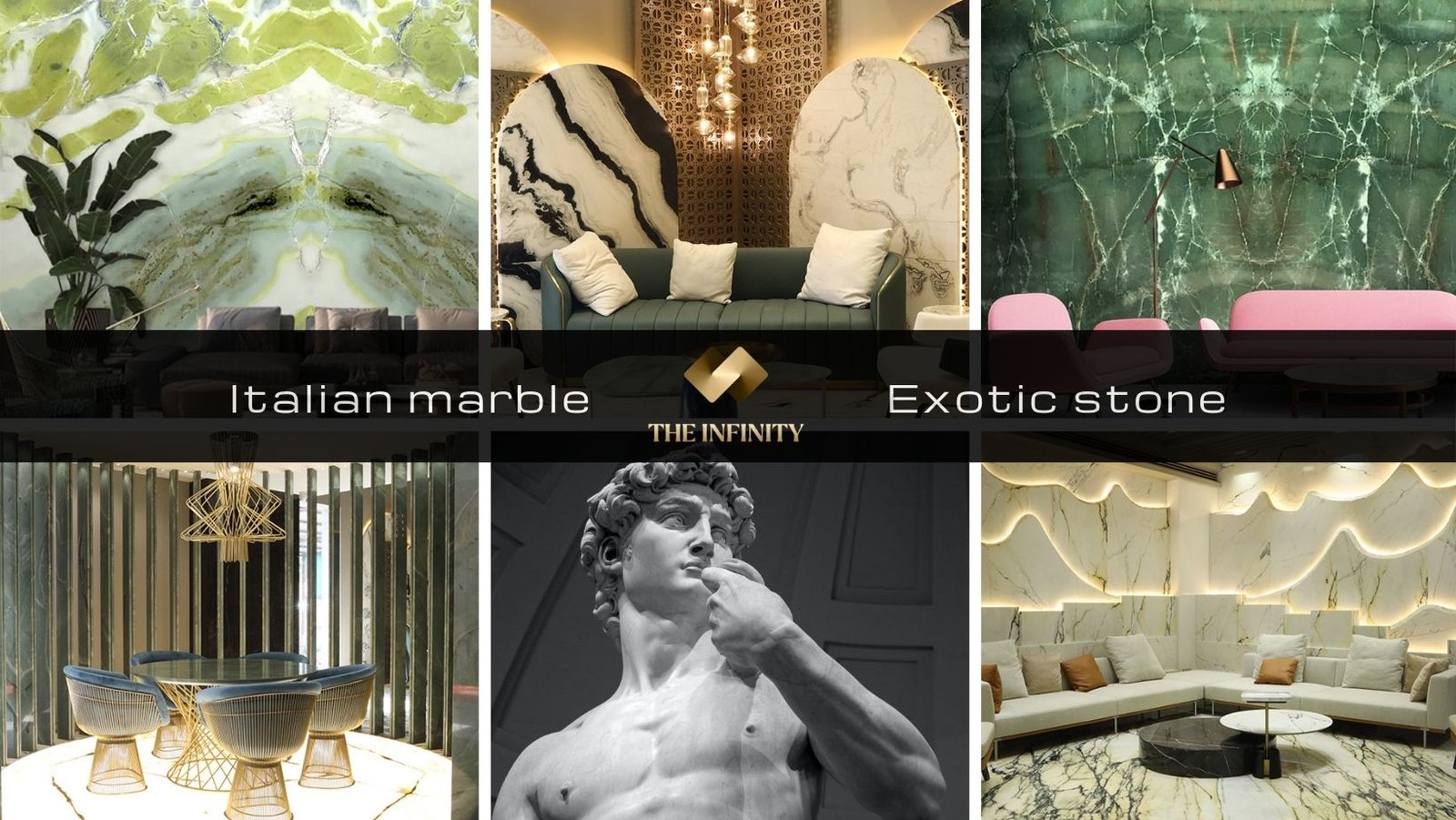
Modern residential interiors are no longer designed around furniture alone. Architects look at the entire visual language of a home—light, proportions, materials, textures and movement—and marble often becomes one of the most important elements tying everything together.
For this reason, selecting Italian marble is not simply about choosing the most expensive or visually striking slab. Architects consider how the stone will behave within a particular space, how its veining will interact with natural and artificial light, whether the slab suits the overall colour palette, and how it will be installed and maintained.
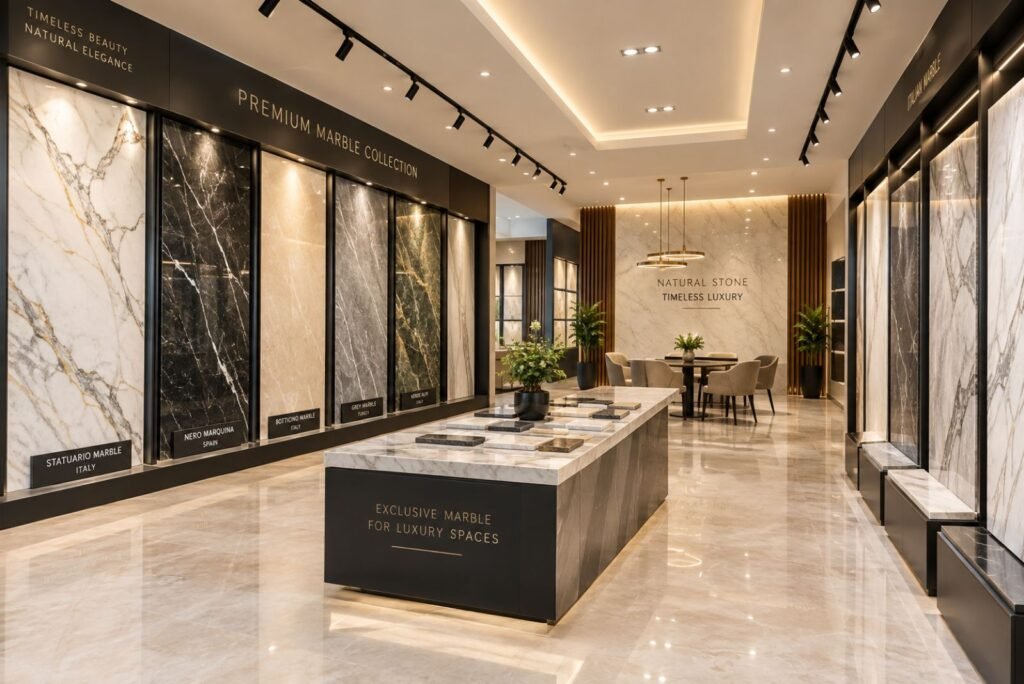
At The Infinity Marble by Bhandari Marble Group, homeowners, architects and interior designers can explore a wide selection of imported and Italian marble in Kishangarh for contemporary residential projects. Options such as Statuario Marble, Carrara Marble, Volakas Marble, Michelangelo Marble, Calacatta Gold Marble, Thassos White Marble and Dover White Marble offer different expressions of luxury, from subtle and understated to dramatic and artistic.
What Architects Look for Before Choosing Marble
An architect usually starts with the character of the room rather than the name of the marble.
A bright living room with large windows may need a stone that reflects light beautifully without making the space visually busy. A formal entrance may benefit from stronger veining, while a calm bedroom could work better with softer patterns.
The selection process commonly considers:
- Natural colour and undertones
- Vein direction and intensity
- Slab size and available dimensions
- Surface finish
- Lighting conditions
- Furniture and wall colours
- Flooring continuity
- Bookmatching possibilities
- Expected maintenance
- Installation requirements
- Overall project budget
This approach helps architects choose marble that belongs to the design instead of making the marble look like an isolated decorative feature.
Why Statuario Marble Remains Popular in Luxury Homes
Statuario Marble in Kishangarh is frequently considered for high-end residential interiors because of its distinctive white background and expressive grey veining.
Architects may use Statuario for feature walls, flooring, staircases, bathroom surfaces, dining areas and statement interiors where the marble itself is intended to attract attention.
The important consideration is balance. Strong Statuario veining can become the focal point of a room, so designers often pair it with restrained furniture, warm wood, neutral fabrics and carefully planned lighting.
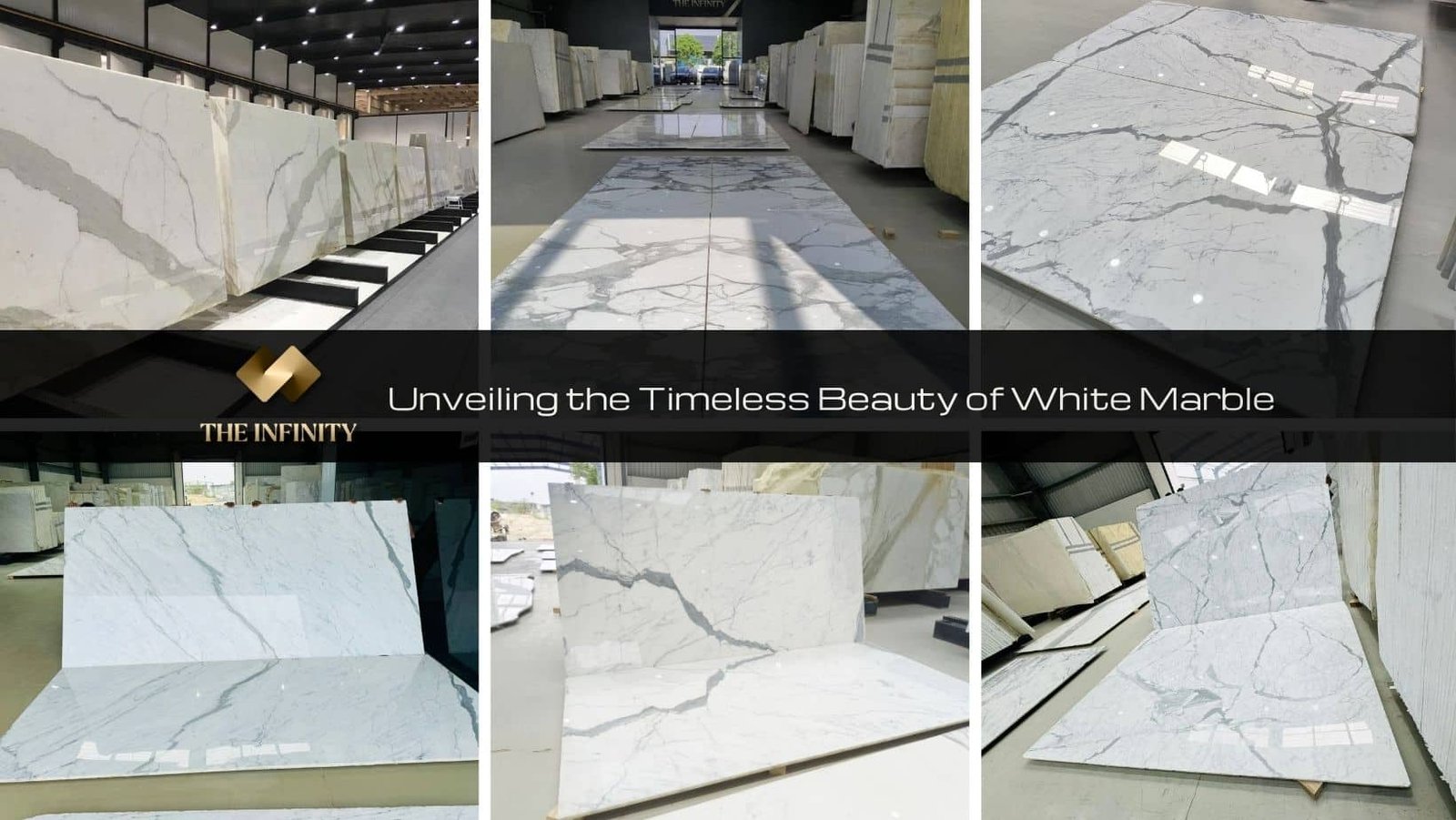
For homeowners searching for Statuario marble in Kishangarh, viewing complete slabs rather than relying only on small samples is particularly useful. Veining can change considerably across a full slab, and that larger visual picture can influence the final design decision.
Italian Marble Selection Is Also About Vein Movement
One of the biggest differences between ordinary material selection and architectural marble selection is the attention given to vein movement.
Two slabs from the same marble category may look noticeably different. One may have fine linear veins, while another can contain wider, more dramatic patterns.
Architects therefore examine the slab as a whole.
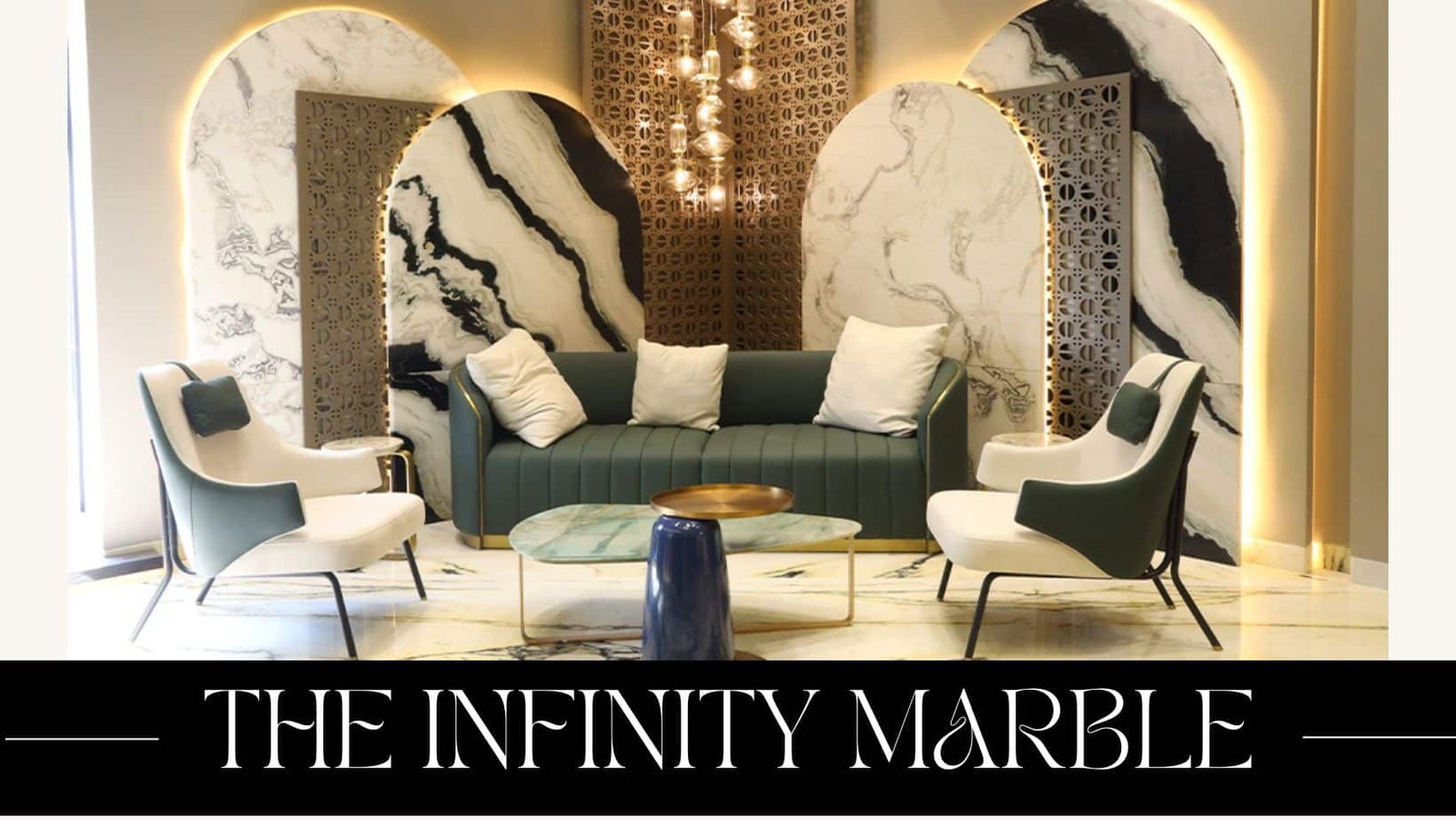
For walls and large floors, they may plan how neighbouring slabs will meet. In feature installations, vein direction can be deliberately aligned to create visual continuity. When bookmatching is appropriate, two slabs can be positioned to create a mirrored composition.
This is one reason experienced architects prefer selecting slabs early in the design process rather than treating marble as a finishing material to be purchased at the end.
Choosing Between Different Italian Marble Styles
Every marble variety creates a different mood.
Known for its elegant white appearance and prominent grey veining, Statuario works particularly well in sophisticated contemporary interiors and statement areas.
Carrara is often preferred when the design calls for a softer, more classic marble character. Its relatively subtle appearance can work well in understated residential spaces.
Volakas is appreciated for its white base and distinctive veining. It can bring a refined European character to walls, floors and feature areas.
Michelangelo Marble can be considered for interiors where the architect wants a stronger visual identity and a luxurious natural-stone presence.
With its combination of white tones and warmer golden or grey veining, Calacatta Gold can complement interiors using brass, beige, cream, wood and other warm finishes.
Thassos White is suitable for designs where a cleaner, brighter and more minimal white marble appearance is desired.
Dover White can work well when designers want a sophisticated white surface that integrates naturally with contemporary interior palettes.
The right choice depends on the project—not simply on which marble is considered the most luxurious.
How Light Changes the Marble Selection
Lighting can completely alter the appearance of natural stone.
A marble selected under showroom lighting may appear different once installed beside a large window, warm pendant lights or concealed LED illumination.
Architects therefore think about the direction and quality of light before finalising the material.
For example, a strongly veined white marble can become highly dramatic under directional lighting, while a softer marble may create a quieter atmosphere under diffused illumination.
This is especially important for white marble in Kishangarh projects, where homeowners often want an open, bright and premium appearance without making the interior feel excessively cold.
Imported Marble in Kishangarh for Contemporary Projects
Kishangarh has become an important destination for homeowners, architects and designers looking for a wide range of natural stone and imported marble.
The advantage for a project team is the ability to compare different materials, colours, patterns and slab characteristics before making a final selection.
When evaluating imported marble in Kishangarh, architects should look beyond appearance alone. They can ask about the stone’s origin, slab availability, thickness, finishing options, installation requirements and suitability for the intended application.
At The Infinity Marble by Bhandari Marble Group, the focus is on helping customers compare marble varieties according to their project’s design requirements rather than choosing solely by colour or price.
Where Architects Use Italian Marble in Modern Homes
Italian marble can be incorporated into several parts of a residential interior.
Living Rooms
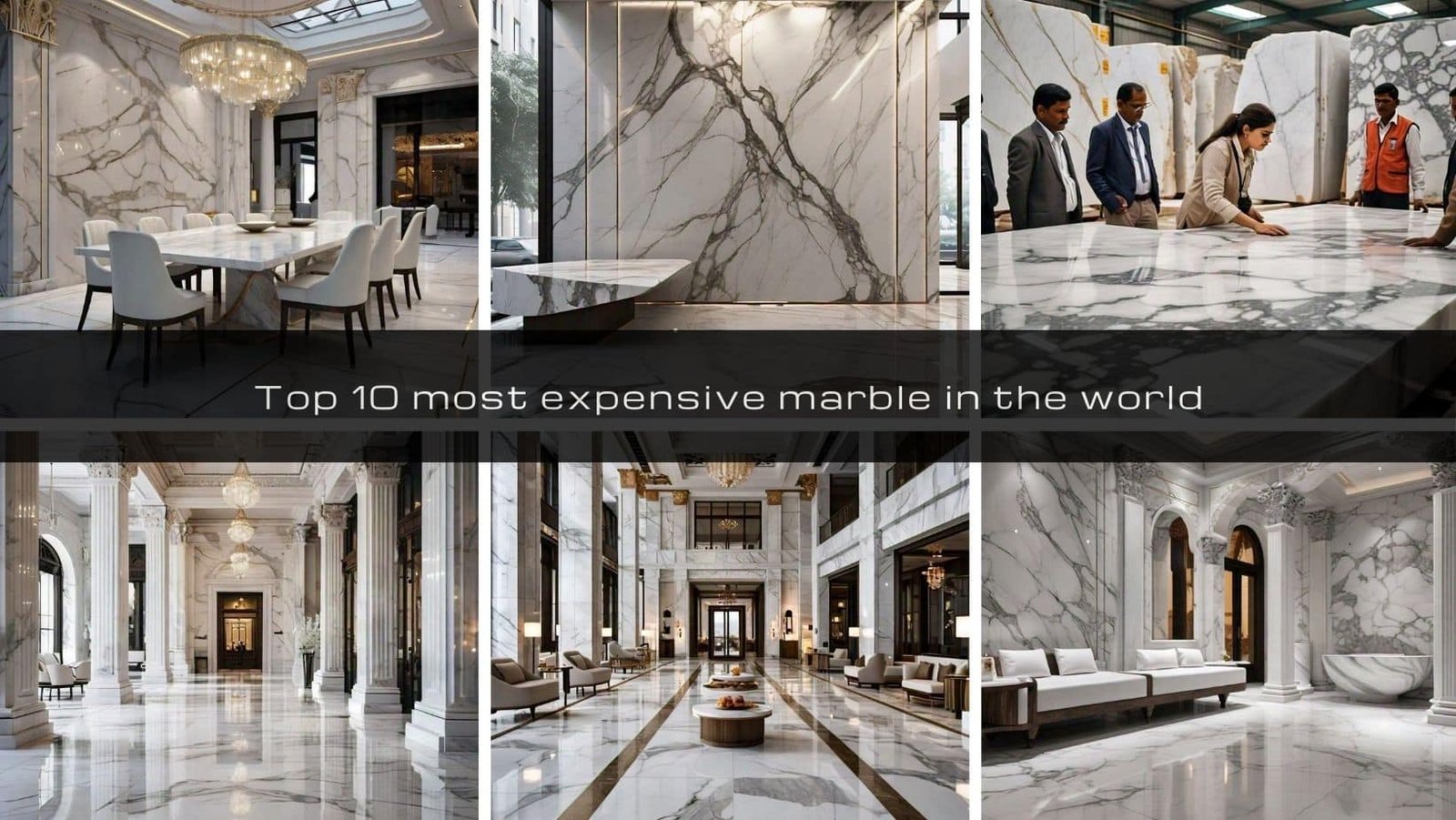
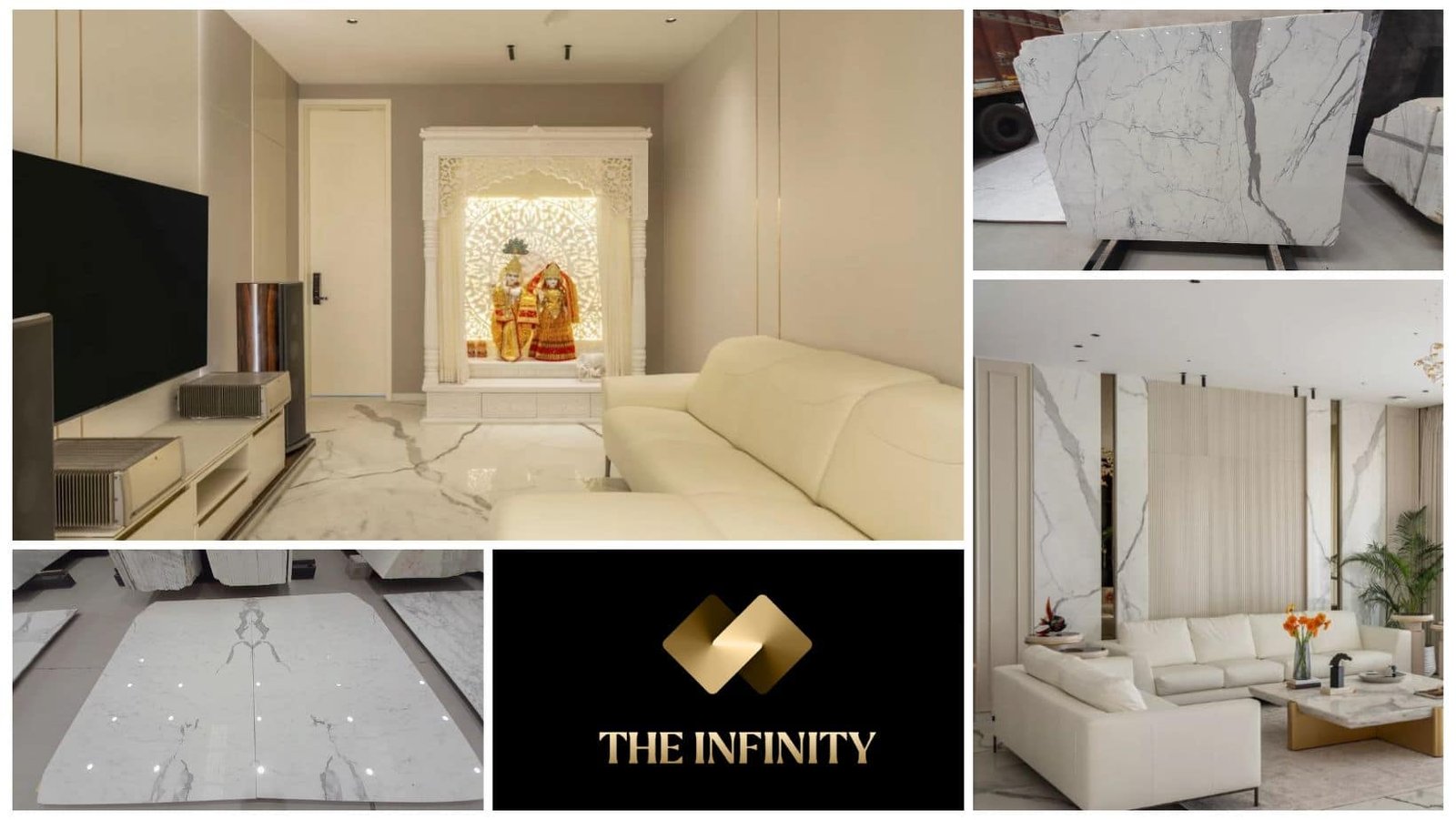
Large-format marble flooring or a carefully selected feature wall can establish the visual identity of the living area.
Entrance Areas
The entrance is often an ideal place for a distinctive marble because it creates an immediate impression when someone enters the home.
Staircases
A continuous marble treatment across steps, risers and surrounding walls can create a cohesive architectural appearance.
Kitchen and Dining Spaces
Depending on the application and technical requirements, selected marble varieties can add a refined natural-stone character to dining and kitchen interiors.
Bathrooms
White Italian marble is particularly popular in luxury bathrooms because its reflective surface can make the space appear brighter and more spacious.
Feature Walls
A dramatic slab can become the centrepiece of a room without requiring excessive decorative elements.
Why Slab Selection Should Happen Before Finalising the Design
A common mistake is designing an interior around a generic marble reference and selecting the actual slabs later.
Natural marble does not behave like a uniform manufactured tile. Every slab has its own movement, colour variation and veining.
Architects who select the actual slabs early can design around what the stone naturally offers.
This becomes even more important when the project includes:
- Large feature walls
- Bookmatched installations
- Full-height marble
- Long flooring runs
- Statement staircases
- Multiple connected surfaces
Instead of forcing the material into a predetermined design, the architect can use the natural characteristics of the stone to improve the final result.
The Infinity Marble Approach to Marble Selection
Choosing premium marble becomes easier when customers can compare materials with professional guidance.
The Infinity Marble by Bhandari Marble Group offers access to a range of Italian and imported marble options in Kishangarh for residential interiors. The objective is to help architects, interior designers and homeowners evaluate the appearance and suitability of different stones before making an investment.
From elegant Statuario Marble in Kishangarh to Carrara, Volakas, Michelangelo, Calacatta Gold, Thassos White and Dover White, each variety can serve a different design purpose.
The best marble is ultimately the one that works naturally with the architecture, lighting, furniture and lifestyle of the home.
What Makes a Marble Selection Look Professionally Designed?
Luxury does not always mean using the most dramatic stone everywhere.
In well-designed homes, marble is often used strategically. A bold marble may be reserved for the entrance or feature wall, while a quieter material establishes continuity across larger areas.
This controlled use of natural stone allows the architecture to remain visually balanced.
Good marble selection is therefore less about following a trend and more about understanding scale, proportion, light, colour and material relationships.
5-Star Customer Experiences
Customers selecting premium marble often value more than the appearance of the slabs. They also look for knowledgeable guidance, material variety, transparent communication and support during selection.
At The Infinity Marble, customer experience is an important part of the marble-buying journey, particularly for architects and homeowners making decisions for large residential projects.
A successful project is not only about how beautiful the marble looks on the day of installation. It is about choosing material that continues to complement the interior design for years.
Final Thoughts
Architects select Italian marble by looking beyond its surface appearance. They study the entire project—the lighting, colour palette, architecture, furniture, proportions and intended atmosphere—before deciding which stone belongs in the space.
For anyone searching for Italian marble in Kishangarh, imported marble in Kishangarh or premium white marble in Kishangarh, visiting a specialist marble collection and comparing complete slabs can make the selection process much more practical.
Whether the project calls for the dramatic character of Statuario Marble, the understated appeal of Carrara, the refined appearance of Volakas or the warmer elegance of Calacatta Gold, the right marble should support the architecture rather than compete with it.
The Infinity Marble by Bhandari Marble Group provides a range of premium marble choices for architects, interior designers and homeowners looking to create distinctive modern residential interiors.
For enquiries: +91 8980000111
Email: bhandarimarblegroup@gmail.com
Frequently Asked Questions
1. Should architects choose marble before designing the interior?
For projects involving large marble surfaces, early selection is often beneficial. It allows the architect to coordinate furniture, wall colours, lighting and slab orientation with the actual stone.
2. How can I compare two Statuario Marble slabs?
Look at the complete slabs rather than comparing only small samples. Check the background tone, vein thickness, direction, spacing and how the pattern will work across the intended area.
3. Is Italian marble suitable for minimalist interiors?
Yes. Minimalist interiors can benefit from marble when the stone is used selectively. A restrained marble pattern can add texture and depth without requiring additional decorative elements.
4. Why does the same marble sometimes look different in different homes?
Lighting, surrounding colours, slab selection, surface finish and installation direction can all influence how natural marble appears after installation.
5. What should I ask a marble supplier before purchasing?
Ask about slab dimensions, thickness, availability, finish, material specifications, installation requirements, wastage considerations and whether the actual slabs can be inspected before final selection.
6. Is white marble a good choice for a small room?
It can be. Lighter marble may help a compact space feel brighter and more open, particularly when combined with suitable lighting and a carefully controlled interior palette.
7. When is bookmatching worth considering?
Bookmatching is most effective when the natural veining has enough movement to create a meaningful mirrored composition. It is particularly attractive on feature walls and other prominent surfaces.
8. How do architects prevent a marble interior from looking too busy?
They usually control the number of competing patterns. If the marble has strong veining, furniture, fabrics and other finishes can be kept comparatively restrained.
9. Can imported marble be used throughout an entire house?
It can, but using one marble everywhere is not always the strongest design decision. Architects may combine complementary stones or vary applications to create hierarchy between different spaces.
10. What is the most important thing to check before finalising marble?
Look at the actual available slabs and evaluate them against the project’s lighting and design palette. A catalogue photograph cannot fully represent the natural variation of real marble.
11. Why is Kishangarh considered for marble selection?
Kishangarh is widely known as a major marble and stone market, giving buyers access to numerous varieties and suppliers in one location, which can make comparison and selection easier.
12. Is the most expensive marble always the best option?
Not necessarily. The better choice is the stone that matches the project’s design, application, maintenance expectations and budget while delivering the desired visual character.