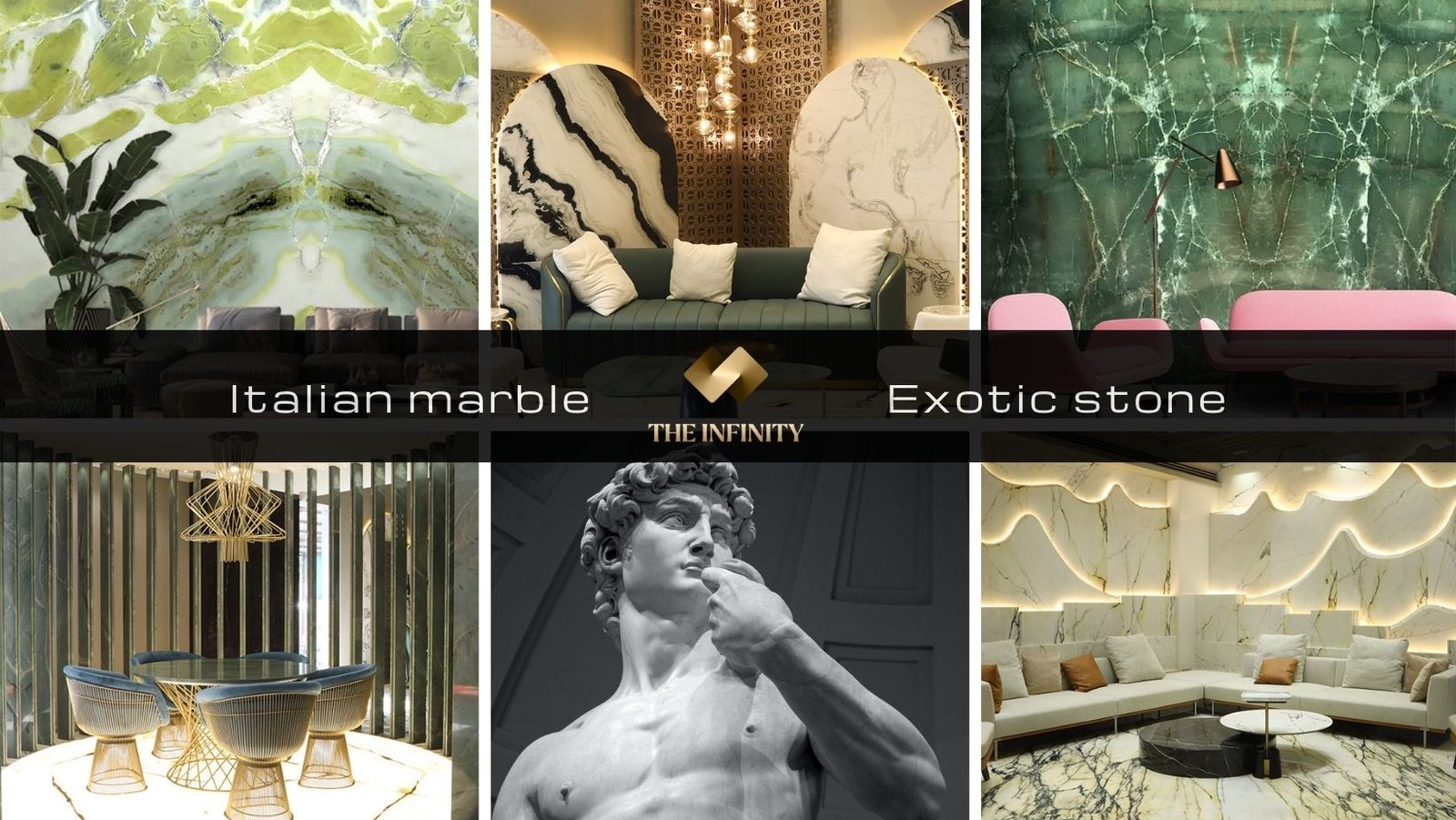

Choosing premium marble for a luxury home is not simply about selecting the whitest slab or the most attractive pattern. Two marble slabs may look similar in photographs but have very different prices because of their origin, natural veining, surface quality, dimensions, availability, and selection grade.
For homeowners planning a villa, premium apartment, hotel, or designer interior, understanding these differences makes it easier to invest in marble that suits both the design vision and the project budget.
At The Infinity Marble by Bhandari Marble Group, buyers can explore premium natural stone options while comparing their appearance, quality, and suitability for different applications. Whether the requirement is Statuario Marble in Kishangarh, Italian marble for flooring, or imported marble for a statement wall, knowing what influences the price helps make a more informed purchase.
1. Country of Origin and Marble Variety
The origin of marble is one of the first factors affecting its market price. Natural stone varieties come from different quarries, and their extraction conditions, availability, processing requirements, and transportation costs vary.
Italian marble is particularly popular in luxury interiors because certain varieties offer distinctive veining and refined visual character. However, not every Italian marble variety commands the same price.
For example:
- Statuario Marble: Valued for its white background and expressive grey veining.
- Carrara Marble: Often selected for its softer grey patterns and understated appearance.
- Calacatta Gold Marble: Known for its striking veining, which may feature warm golden tones.
- Michelangelo Marble: Chosen for its distinctive natural character, depending on the particular selection.
- Volakas Marble: Appreciated for its pale background and flowing grey patterns.
- Thassos White Marble: Selected for its bright white appearance.
- Dover White Marble: Considered by buyers seeking a light, elegant stone aesthetic.
The price of each variety depends on the specific material, its quality, origin, current availability, and the supplier’s stock. The variety name alone is not enough to establish its value.
2. Whiteness, Veining and Natural Appearance
When buying premium white marble, appearance can significantly influence the price.
Some slabs have a clean, bright background with delicate veins, while others feature dramatic grey movements, contrasting lines, or more complex patterns. Buyers may pay a premium for a particular appearance that is difficult to source consistently.
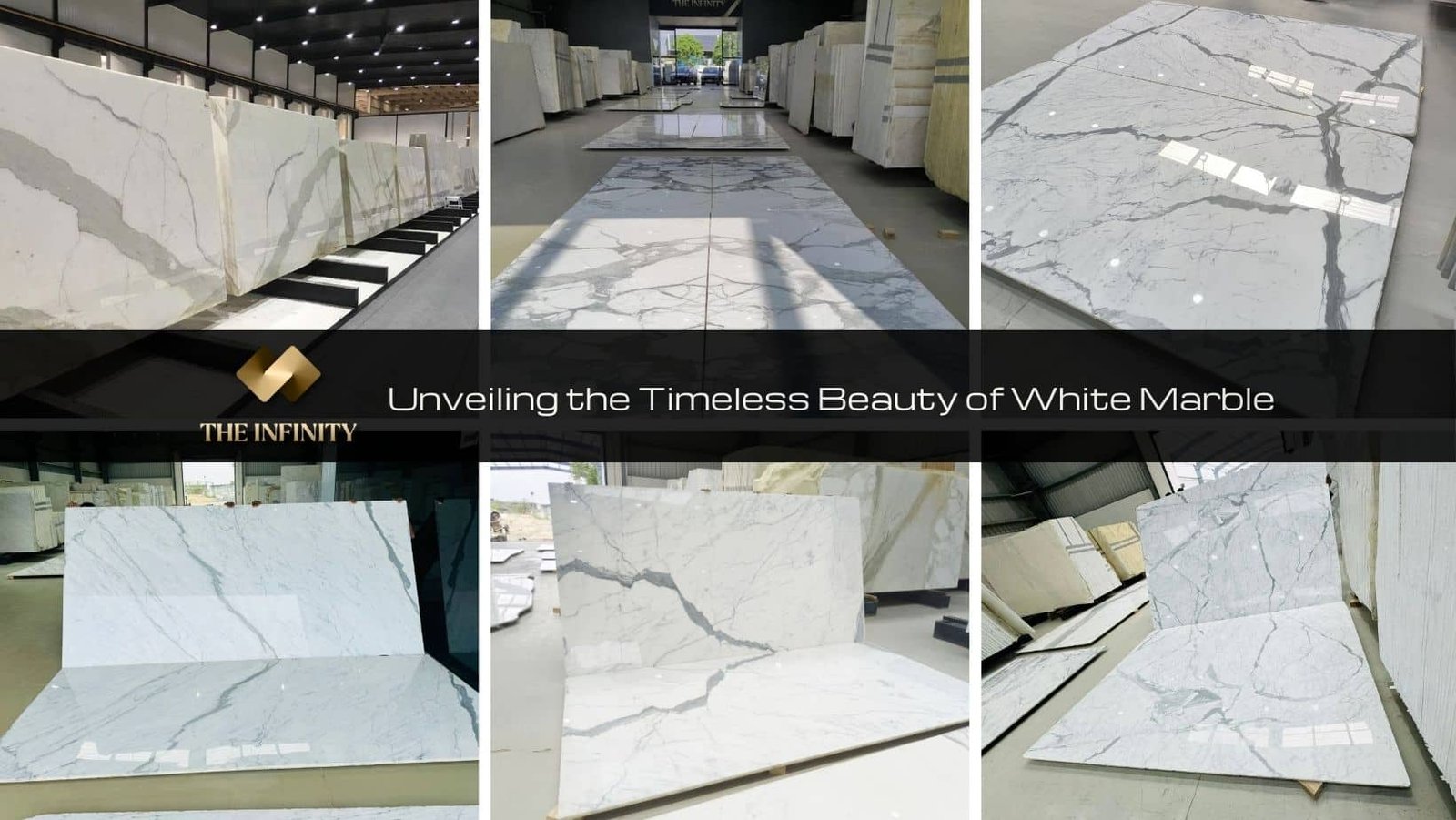
Statuario Marble in Kishangarh, for instance, can vary considerably from one slab selection to another. A buyer looking for a balanced pattern across a large living room may have different requirements from someone choosing a dramatic feature wall.
Natural marble also contains variations in tone, mineral distribution, and veining. These differences are part of the material’s natural character, not necessarily defects.
Practical buying tip: Compare actual slabs under consistent lighting instead of relying entirely on catalogue photographs. This is especially important when the project requires a particular shade of white or a specific vein pattern.
3. Marble Grade and Slab Quality
Not all slabs within the same marble variety have identical commercial value. Their visual consistency, finishing, dimensions, and physical condition all influence the price.
During selection, buyers should examine:
- Surface cracks, fissures, chips, and edge damage.
- Visible resin or filler repairs, where present.
- Colour variation between slabs.
- Surface finishing and polishing quality.
- Thickness consistency and dimensional suitability.
- Natural features that may affect the intended application.
A higher-priced slab is not automatically the best choice for every project. Its quality should be assessed against the design requirements and the intended use.
For flooring, consistency across multiple slabs may be particularly important. For a decorative wall, a distinctive vein pattern may matter more than uniformity.
4. Slab Size, Thickness and Selection Requirements
The dimensions of marble slabs can affect both material cost and installation planning. Large slabs may be desirable for spacious interiors because they can reduce the number of visible joints, although availability depends on the particular variety and stock.
Thickness also matters. The appropriate thickness depends on the application, structural support, fabrication method, and installation system.
A project requiring carefully selected, closely matched slabs may cost more than one using a wider range of patterns. Bookmatching, where adjacent slabs are arranged to create a mirrored pattern, may require additional selection, planning, and fabrication.
Before purchasing, confirm the slab dimensions, usable area, thickness, and suitability for the planned installation.
5. Import Duties, Transportation and Handling
Imported marble pricing includes more than the value of the stone itself. Depending on the supply chain, the final cost can reflect international freight, insurance, applicable duties and taxes, domestic transportation, handling, and storage.
Marble is heavy and vulnerable to damage during careless handling. Packaging, loading methods, transport distance, and unloading arrangements can therefore affect the delivered cost.
For buyers sourcing imported marble in Kishangarh, it is useful to understand exactly what the quoted price covers.
Ask whether the quotation includes:
- Applicable taxes and transportation.
- Packing, loading, and unloading.
- Delivery to the project location.
- Slab inspection and selection.
- Any agreed fabrication or finishing services.
A lower initial quote may not represent the lowest overall project cost if important services are excluded.
6. Availability and Current Market Demand
Some premium marble varieties are easier to source than others. Availability can change with quarry production, import schedules, shipment timing, and the quality of material available in a particular batch.
If a project requires a large quantity of visually consistent Statuario Marble, finding sufficient matching stock may be more challenging than purchasing a smaller quantity for a bathroom vanity or feature panel.
Limited availability does not automatically mean a variety is better quality. It simply means buyers should verify the available quantity and selection before finalising their design.
For large residential and commercial projects, confirming the stock required for the entire phase can help avoid costly substitutions later.
7. Wastage, Cutting and Installation Costs
The purchase price per square foot is only one part of the final marble flooring cost.
Consider a living room with an irregular layout, several door openings, columns, or decorative borders. Cutting the slabs to fit these areas can create more wastage than a simple rectangular room.
The final requirement may also be affected by:
- Room dimensions and layout.
- Slab sizes and vein direction.
- Staircase cuts and edge detailing.
- Bookmatched or symmetrical designs.
- Fabrication requirements.
- Installation expertise and finishing standards.
A qualified installer should calculate the material requirement using the actual layout and slab dimensions. The wastage allowance should be based on the project rather than a universal percentage.
8. Why Marble Selection Matters for Luxury Interiors
The most expensive marble is not necessarily the right marble for every space. A well-chosen material should complement the architecture, lighting, furniture, and overall design.
For example, Statuario Marble can create a striking focal point in a spacious living room. Carrara Marble may suit a more restrained interior, while Calacatta Gold Marble can introduce warmer visual accents into a carefully planned luxury setting.
Thassos White Marble may appeal to buyers seeking a bright, clean appearance, whereas Volakas Marble can introduce more movement through its natural veining.
The best selection depends on how the marble will look across the complete installation, not just on the appearance of a single sample.
9. How to Compare Marble Quotations Properly
When comparing quotations from marble suppliers, make sure the offers cover equivalent material and services. A price comparison is meaningful only when the grade, dimensions, finish, quantity, and commercial terms are reasonably comparable.
Use these questions before placing an order:
- Is the quoted marble the exact variety and selection inspected?
- Are the slab dimensions and thickness specified?
- Can the available quantity meet the complete project requirement?
- Are natural variations, repairs, or visible imperfections disclosed?
- Does the price include taxes, transport, and handling?
- What is the procedure if slabs arrive damaged or differ from the agreed selection?
- Are fabrication and installation charged separately?
Clear answers reduce misunderstandings and help buyers compare the actual value of each quotation.
Choose Premium Marble with Confidence at The Infinity Marble
At The Infinity Marble by Bhandari Marble Group, marble selection can be approached with attention to appearance, application, available stock, and project requirements. Buyers looking for Italian marble in Kishangarh, white marble in Kishangarh, or premium imported stone can compare different varieties before deciding which material suits their space.
Whether the project calls for Statuario Marble, Carrara Marble, Volakas Marble, Michelangelo Marble, Calacatta Gold Marble, Thassos White Marble, or Dover White Marble, the objective should be to select stone that meets the design brief and offers the right balance of quality, appearance, and budget.
When evaluating a supplier, consider genuine five-star customer reviews alongside slab inspection, transparent quotations, communication, and delivery arrangements. Reviews can offer useful insights, but the actual material and agreed terms should always guide the final decision.
Contact The Infinity Marble by Bhandari Marble Group
Phone: +91 8980000111
Email: bhandarimarblegroup@gmail.com
Make your marble selection after comparing the stone itself, the complete quotation, and the requirements of your project.
Frequently Asked Questions
1. Why can two Statuario Marble slabs have different prices even when both look white?
Their background shade, vein pattern, dimensions, visible natural features, finish, and overall selection quality may differ. The quantity available from a particular batch can also influence the quotation.
2. Should I finalise marble before the interior designer completes the flooring layout?
It is better to coordinate both decisions. The designer should establish the layout and pattern requirements early enough for slab selection, cutting plans, and quantity calculations to work together. This is especially important for bookmatched designs and prominent feature areas.
3. How can I check whether the marble quotation is genuinely comparable with another supplier’s offer?
Compare the exact variety, selected slabs, dimensions, thickness, quantity, finish, taxes, delivery terms, and any additional services. Two quotations for the same named marble may still cover different grades or commercial conditions.
4. Is a premium white marble always suitable for kitchen countertops?
Not automatically. Marble is a natural stone that can be affected by acidic substances, staining, and scratching. Suitability depends on how the kitchen will be used, the chosen finish, maintenance expectations, and the fabrication and sealing recommendations. Compare alternative countertop materials if low maintenance is the priority.
5. What should I do if the marble looks different after installation?
Inspect the slabs before installation and retain the agreed selection details. Natural veining and colour can appear different under changing lighting conditions or when viewed across a larger area. If the difference appears to involve damage or a mismatch with the agreed material, document it and contact the supplier and installer promptly.
6. Can I buy all the marble for my villa in one selection?
Where sufficient stock is available, selecting the required material for the planned phase together can improve consistency and reduce the risk of later batches looking different. Confirm quantities, reserve arrangements, and delivery schedules with the supplier before proceeding.
7. Does a higher marble price guarantee better long-term performance?
No. Price alone does not establish durability or suitability. The stone’s characteristics, intended application, installation quality, surface treatment, maintenance, and environmental exposure all influence performance.
8. What information should I send a marble supplier to get a more useful quotation?
Share the marble variety, approximate area, intended application, preferred appearance, location, and any special requirements such as bookmatching or specific slab dimensions. A floor plan or slab reference can help the supplier understand the project more accurately.
9. Is imported marble in Kishangarh cheaper than buying it from another city?
The final cost depends on the material’s availability, supplier pricing, transportation, handling, taxes, and delivery arrangements. Compare complete delivered quotations rather than assuming that a particular city will always offer the lowest price.
10. What is the most important thing to check before paying an advance for premium marble?
Confirm the selected material, quantity, price inclusions, payment terms, delivery schedule, and procedure for handling damage or discrepancies. For a large project, written confirmation of the selection and commercial terms is particularly valuable.