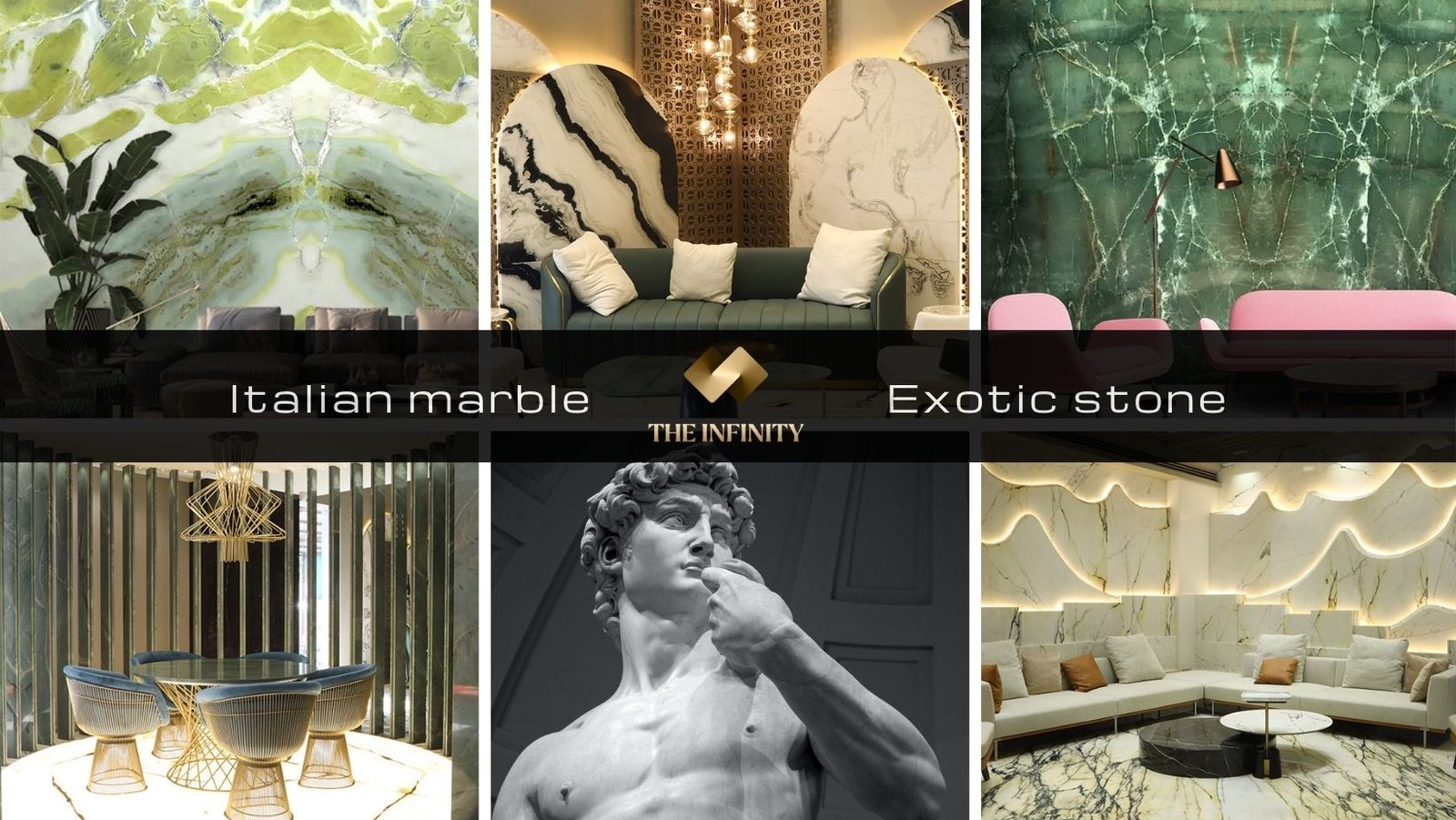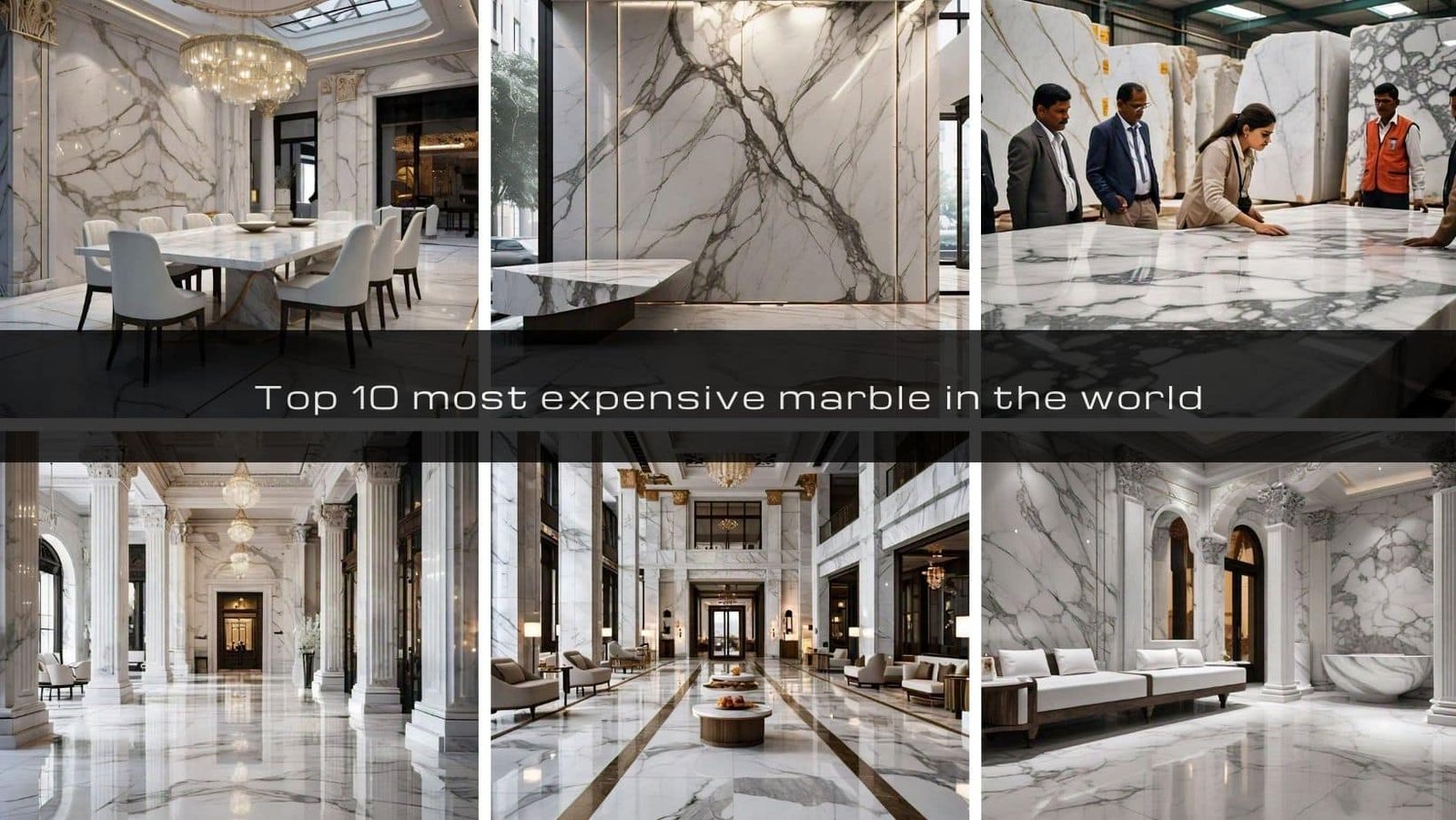
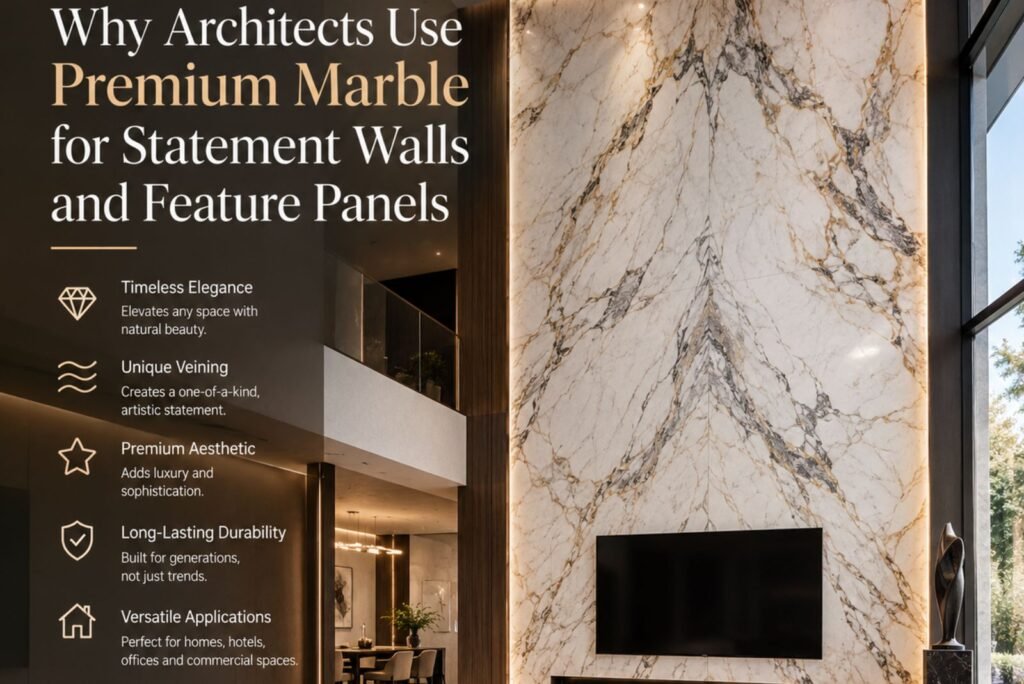
In luxury architecture, a wall does not always need artwork, decorative mouldings, or elaborate finishes to attract attention. Sometimes, the natural beauty of a carefully selected marble slab is enough. Its distinctive veins, subtle colour variations, and natural patterns can transform an ordinary wall into a defining feature of the entire interior.
Architects increasingly consider premium marble for statement walls and feature panels in luxury homes, hotels, offices, and commercial spaces. The reason goes beyond appearance. Marble offers flexibility in panel design, a wide range of natural patterns, and the ability to complement different architectural styles.
The Infinity Marble by Bhandari Marble Group helps customers explore premium marble options for projects where material selection plays an important role in the final design. For buyers searching for Statuario Marble in Kishangarh, Italian marble in Kishangarh, or imported marble in Kishangarh, understanding the differences between marble varieties can make the selection process more practical.
Why Marble Makes a Statement Wall Stand Out
A statement wall is intended to attract attention without making the entire room feel crowded. Marble achieves this through its natural character rather than relying entirely on additional decoration.
Every variety has its own visual qualities. Some stones feature dramatic grey veins, others contain warm golden movements, while certain white marbles offer a quieter and more consistent appearance.
Architects generally consider three factors when selecting marble for feature panels.
Natural pattern: The direction, thickness, and movement of the veins determine how the wall will look from different viewing angles.
Colour coordination: White, grey, cream, and golden tones can be matched with furniture, flooring, metal finishes, and lighting.
Slab dimensions: Large slabs may help create a more continuous appearance with fewer visible joints, depending on the wall dimensions and available material.
A successful marble feature wall is not necessarily the most expensive or heavily patterned one. It is the one that fits the proportions and purpose of the space.
Which Marble Varieties Do Architects Prefer for Feature Panels?
Choosing marble becomes easier when the intended design effect is clear. A dramatic reception wall may require a different stone from a peaceful bedroom interior or a minimalist living room.
1. Statuario Marble for Bold Architectural Features
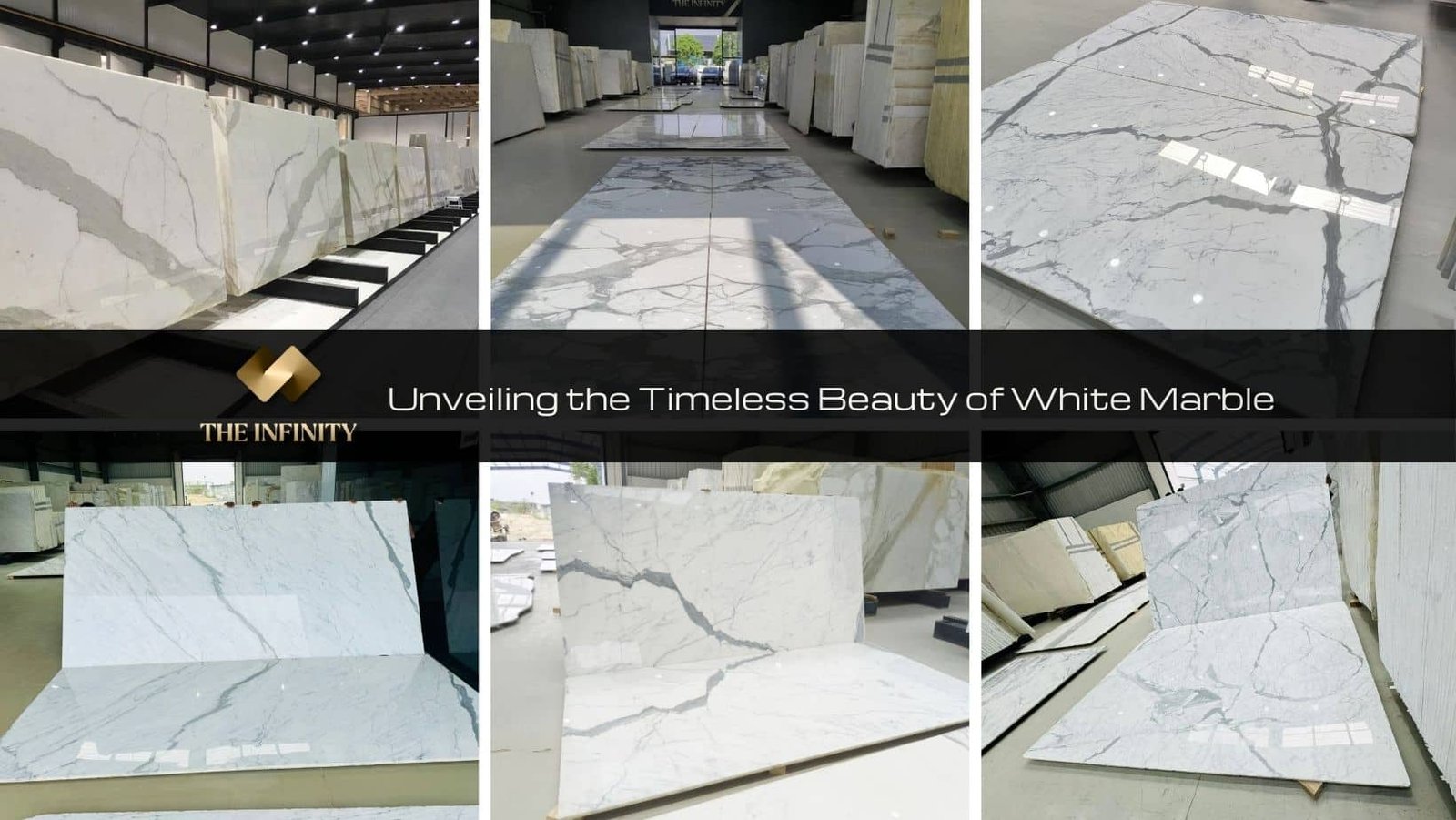
Statuario Marble is widely appreciated for its white background and distinctive grey veining. Depending on the individual slab, its patterns can create strong visual movement across a large surface.
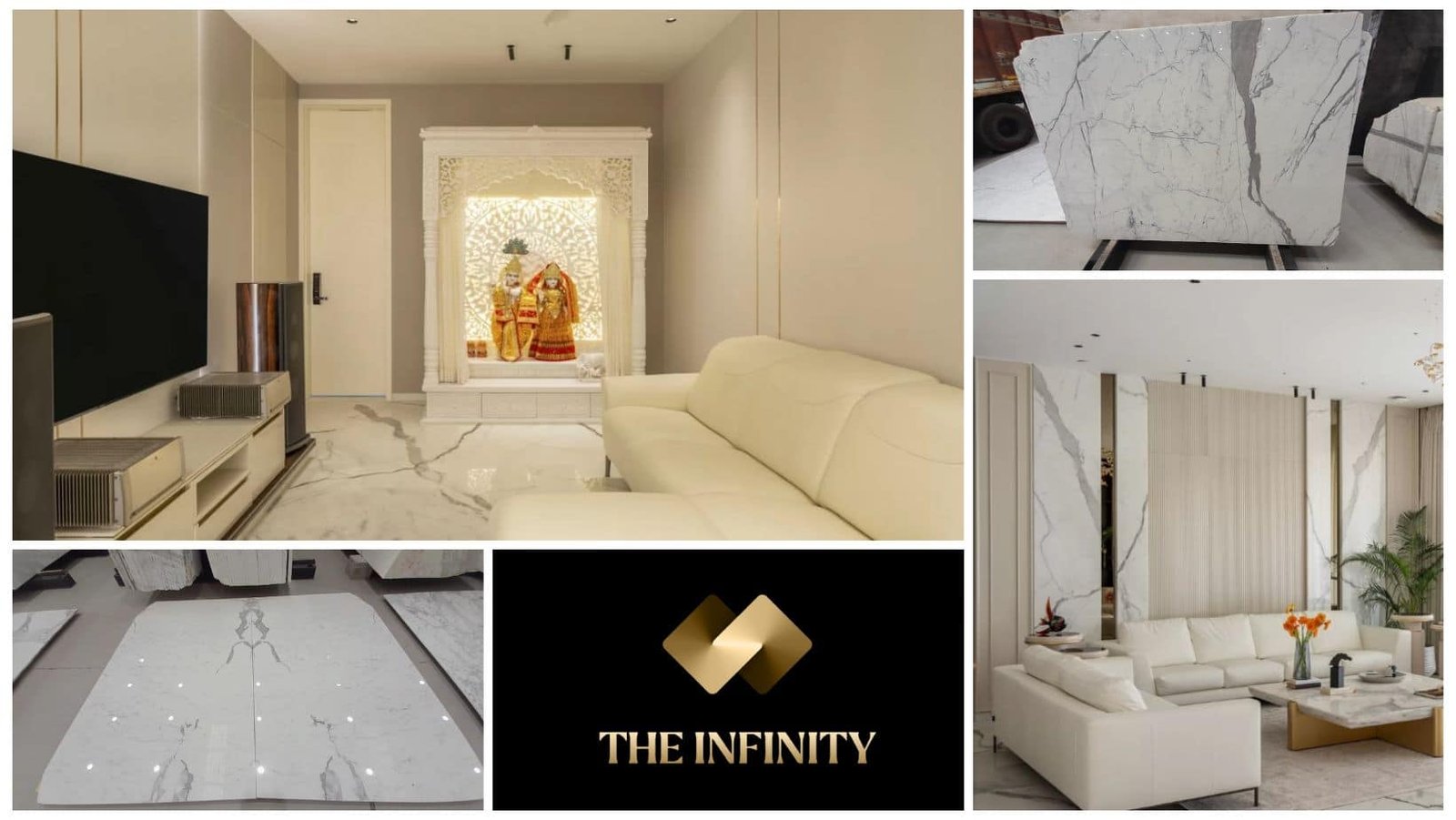
Architects may consider Statuario Marble for entrance walls, luxury living rooms, hotel lobbies, and feature panels behind carefully selected furniture.
For customers comparing Statuario Marble in Kishangarh, inspecting actual slabs is particularly important. Vein density, background whiteness, pattern direction, and natural variations can differ considerably between individual pieces.
2. Carrara Marble for Understated Elegance
Italian Carrara Marble offers a different design approach. Its characteristic grey veining and lighter background can create a softer appearance than more dramatically patterned white marbles.
It works well in interiors where the stone should contribute texture and refinement without becoming the only element attracting attention.
Architects may use Carrara Marble in contemporary living rooms, bedroom feature walls, and interiors featuring natural wood, neutral fabrics, and restrained decorative details.
3. Volakas Marble for Flowing Natural Patterns
Volakas Marble is often considered for its flowing grey markings against a light background. Depending on the selected slab, these patterns can introduce movement without making the wall appear excessively busy.
It can suit residential feature panels, decorative entrance walls, and interiors where a lighter marble is preferred but a completely uniform surface would feel too plain.
4. Michelangelo Marble for Distinctive Interiors
Michelangelo Marble can be considered for premium projects where the natural pattern needs to complement the architectural composition.
Rather than choosing it solely by name, buyers should examine the available material, including its background colour, vein structure, finish, and slab consistency.
These details help determine whether the selected stone will work with the furniture, lighting, and surrounding finishes.
5. Calacatta Gold Marble for Warm Luxury
Calacatta Gold Marble is known for its characteristic combination of light backgrounds, grey veining, and warm golden accents.
This colour combination can complement brass fittings, warm-toned lighting, beige upholstery, and natural timber. It is particularly worth considering when the interior design includes warm metallic details rather than a strictly monochromatic palette.
The final appearance depends on the individual slabs, so architects should review the actual stone before confirming the layout.
6. Thassos White Marble for a Clean Appearance
Thassos White Marble is valued for its bright white appearance. It can suit architectural interiors that require a relatively uniform white surface instead of prominent contrasting veins.
For minimalist spaces, this quality may be useful when the design relies on clean lines, carefully controlled lighting, and a restrained material palette.
7. Dover White Marble for Soft, Light-Toned Interiors
Dover White Marble can be considered for projects where a softer white or light-toned surface is preferred.
The actual background, pattern, and finish should be assessed before selection, especially when the stone is being combined with other white materials. Even small differences in tone can become noticeable when several large panels are installed together.
For buyers exploring white marble in Kishangarh or imported marble in Kishangarh, comparing these varieties side by side can help clarify which material best suits the intended interior.
How Architects Design Marble Feature Panels
Selecting a beautiful slab is only the beginning. The way the marble is cut, positioned, and installed determines whether the final wall looks carefully planned or visually disconnected.
Bookmatching for Symmetrical Patterns
Bookmatching involves positioning adjacent slabs so their natural vein patterns create a mirrored effect.
This technique can be effective on large living room walls, hotel reception backdrops, and prominent entrance areas. The mirrored pattern becomes part of the architecture rather than simply a decorative surface.
However, successful bookmatching requires appropriate slab selection and a planned cutting sequence. Not every group of slabs will produce a suitable mirrored composition.
Large Panels for a More Continuous Appearance
Where suitable slab dimensions are available, larger marble panels can reduce the number of visible joints across a wall.
This approach is often considered for modern interiors with clean architectural lines. Before proceeding, the architect and fabricator must account for wall dimensions, panel weight, handling access, cutting requirements, and the appropriate fixing system.
Lighting That Highlights Natural Veining
Lighting can change the way marble is perceived. Warm light may emphasise golden or creamy undertones, while neutral lighting can make grey patterns more prominent.
Architects may use concealed lighting, wall washers, or carefully positioned spotlights to highlight the stone.
It is advisable to test the proposed lighting against the actual marble sample or slab. Highly reflective finishes can create glare, and uneven illumination may exaggerate differences that were less noticeable under showroom lighting.
Combining Marble with Other Materials
Marble does not need to cover every wall to create a premium interior.
A statement panel can be paired with timber, textured plaster, glass, brushed metal, or understated paint finishes. These materials provide contrast and allow the marble to remain the focal point.
For example, Calacatta Gold Marble may complement warm metallic details, while Carrara Marble can work with neutral furniture and natural wood.
The objective is to create a balanced interior rather than filling every surface with decorative materials.
Where Can Premium Marble Feature Walls Be Used?
Living Rooms
A marble feature wall can establish the visual identity of a living room. It may sit behind a sofa, frame a television area, or form the backdrop for a carefully positioned piece of furniture.
Architects should consider screen mounting, cable access, reflections, and the position of seating before finalising the panel layout.
Hotel and Corporate Reception Areas
Reception spaces benefit from materials that create a clear visual focal point. A well-planned marble wall behind a reception desk can contribute to a refined and professional interior.
In these settings, slab consistency, signage placement, lighting, and ease of maintenance deserve attention alongside appearance.
Entrance Foyers
An entrance is often the first interior space visitors experience. A marble feature panel can create an immediate impression without requiring elaborate decoration.
The most effective designs usually consider the wall, console, flooring, lighting, and entrance proportions as a single composition.
Staircase Walls
Marble wall cladding can add visual continuity to a staircase, particularly in homes with double-height spaces or open staircases.
Because these installations may involve tall panels and challenging access, structural support, mechanical fixing, transport, and professional installation must be planned carefully.
Luxury Bedrooms
In bedrooms, marble can be used behind a headboard or on a selected wall to introduce natural texture.
Softer patterns and lighter tones may work well where the intended atmosphere is calm rather than dramatic. Lighting and the relationship between the marble and other bedroom finishes should guide the final choice.
Why Buyers Consider Italian Marble in Kishangarh
Kishangarh is an important marble trading and processing centre in India. Buyers visit the market to compare natural stone varieties, inspect available slabs, and discuss material requirements for residential and commercial projects.
When looking for Italian marble in Kishangarh or imported marble in Kishangarh, buyers should evaluate the actual material rather than relying only on a variety name or photograph.
The following checks can help make the selection more reliable:
- Background and veining: Compare the actual slabs to establish whether their patterns suit the intended wall.
- Slab consistency: Check whether the material available in the required quantity can create a coordinated appearance.
- Surface condition: Inspect for visible cracks, repairs, resin treatment, and other characteristics relevant to the stone.
- Dimensions and cutting: Confirm usable slab sizes, panel dimensions, joint positions, and potential wastage.
- Availability: Ask whether the selected slabs can be reserved together for the project.
- Installation requirements: Confirm suitable support, fixing methods, handling arrangements, and substrate conditions with qualified professionals.
These checks are particularly important when the marble will occupy a prominent wall where every joint and change in pattern may be visible.
What Should You Confirm Before Ordering Marble for a Feature Wall?
Before confirming a purchase, share the approximate wall dimensions, preferred marble variety, desired finish, project location, and expected installation schedule with the supplier.
If the design requires bookmatching or continuous vein movement, ask for a slab layout plan before fabrication. Reviewing the proposed arrangement can help identify unwanted pattern breaks and reduce avoidable cutting mistakes.
It is also useful to clarify what the quotation includes. Material supply, cutting, edge finishing, transport, installation, and sealing may be separate items, depending on the supplier and project arrangement.
Marble is a natural material, so some variation in colour, pattern, and texture is expected. The selected slabs should be assessed in the context of the finished design rather than assuming every piece will look identical.
For heavy or large-format panels, a qualified professional should determine the suitable support and fixing system based on the panel dimensions, stone characteristics, substrate, and site conditions.
The Infinity Marble by Bhandari Marble Group
A statement wall works best when the marble has been selected for the specific space rather than simply because it is considered a premium variety.
Statuario Marble may suit a project requiring strong grey veining, Carrara Marble may offer a quieter effect, and Calacatta Gold Marble may introduce warmth through its characteristic golden accents. Volakas, Michelangelo, Thassos White, and Dover White Marble provide further options depending on the available material and the intended design.
The Infinity Marble by Bhandari Marble Group serves customers exploring premium marble options in Kishangarh for residential and commercial interiors.
Whether the requirement involves Statuario Marble in Kishangarh, white marble in Kishangarh, or imported marble for a distinctive feature panel, buyers should compare actual slabs, confirm availability, and plan the installation before making a final decision.
For enquiries about marble varieties and project requirements:
Phone: +91 8980000111
Email: bhandarimarblegroup@gmail.com
Customers can enquire about suitable varieties, available slabs, and material requirements for their projects. Prospective buyers may also consult genuine five-star customer reviews to understand other customers’ documented experiences with product selection, communication, and service.
Frequently Asked Questions
1. Can a marble feature wall be designed without visible joints?
A wall can be planned to minimise visible joints, but completely joint-free installation is not always practical or appropriate. The result depends on slab dimensions, wall size, access, fixing requirements, and the installation design. Large panels may reduce the number of joints where suitable material is available.
2. Should marble be selected before the furniture or after it?
For a major feature wall, it is helpful to coordinate both decisions early. If the furniture and colour palette are already finalised, choose marble that complements them. If the marble is the main design feature, use its background and veining to guide the selection of furniture, fabrics, and metal finishes.
3. How do architects check whether a marble slab will look different under home lighting?
They can examine the actual slab under lighting conditions similar to the project and compare it with the proposed light temperature. Photographs taken under different lighting conditions may help, but the physical material remains the better reference for judging colour and surface reflection.
4. Is a highly veined marble always better for a statement wall?
No. Strong veining can create a dramatic focal point, but a subtle pattern may suit the architecture more effectively. The choice depends on the wall’s dimensions, the surrounding finishes, the lighting, and whether the room already contains visually dominant elements.
5. What happens if additional marble is needed after installation begins?
Finding an exact match later may be difficult because natural stone varies between slabs and batches. It is sensible to calculate the required quantity before fabrication, account for cutting wastage, and discuss whether matching material can be reserved for future repairs or extensions.
6. Can the same marble be used for a feature wall and nearby flooring?
Yes, provided the selected stone and finish are suitable for both applications. However, wall and floor surfaces have different functional requirements. Flooring needs appropriate slip resistance, wear performance, and maintenance planning, so the finish should not be selected solely to match the wall.
7. How can buyers compare quotations from different marble suppliers fairly?
Compare the exact marble variety, slab dimensions, thickness, finish, quantity, material condition, and scope of supply. Check whether transport, fabrication, wastage, and installation are included or charged separately. A lower quotation may not represent the same specification or service.
8. What should be checked when marble panels are intended for a double-height wall?
The design team should review panel weight, fixing details, substrate capacity, lifting access, scaffolding or equipment requirements, joint placement, and installation sequencing. A qualified professional should approve the support system before installation begins.
9. Is polished marble the only option for premium wall panels?
No. The suitable finish depends on the design objective and the stone’s characteristics. Polished marble can emphasise colour and pattern, while honed finishes offer a less reflective appearance. Sample approval under the intended lighting helps establish which finish works best.
10. What information helps a marble supplier recommend suitable slabs more accurately?
Wall measurements, photographs of the space, a preferred colour palette, the intended finish, approximate budget, and the desired vein pattern are useful starting points. For bookmatched panels, share the proposed layout and dimensions so slab suitability can be assessed before fabrication.