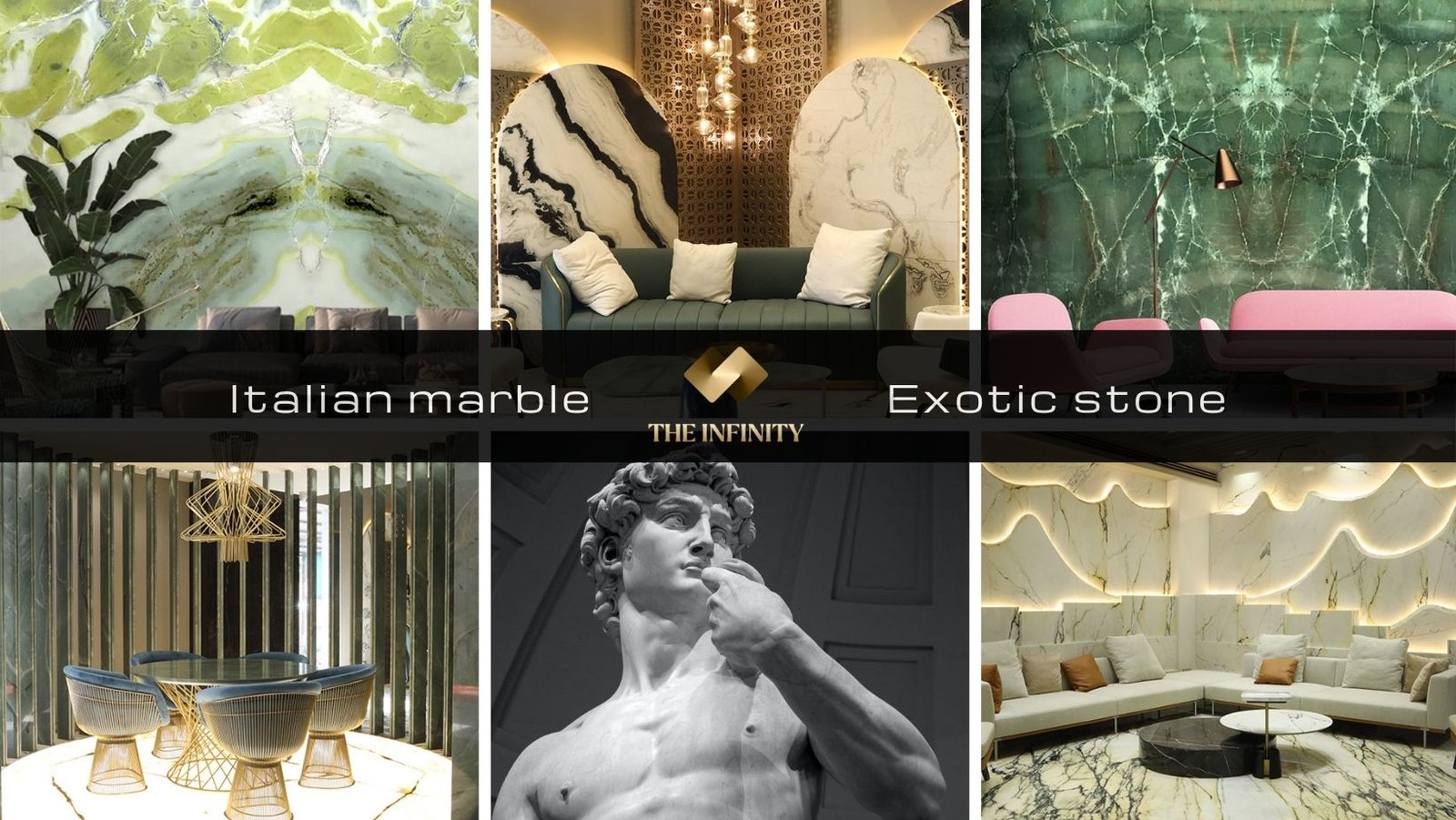
Choosing beautiful marble is only one part of creating an elegant interior. The real difference comes from knowing how to coordinate natural marble across floors, walls and staircases so that the entire space feels connected rather than visually confusing.
Marble has natural movement, veining, shade variations and surface character. Because of this, using the same marble everywhere does not always produce the best result. In many luxury homes, hotels and commercial interiors, designers combine two or more marble varieties to create contrast while maintaining a consistent visual language.
This is particularly important when working with premium materials such as Statuario Marble, Carrara Marble, Volakas Marble, Michelangelo Marble, Calacatta Gold Marble and Thassos White Marble. Each has its own pattern, background tone and personality.
For buyers looking for Statuario Marble in Kishangarh, imported marble in Kishangarh or Italian marble in Kishangarh, understanding how different surfaces should relate to one another can make the selection process much easier.
Why Marble Matching Requires More Than Choosing the Same Colour
A common approach is to select white marble for the floor and then search for another white marble for the walls and staircase. The problem is that two white marbles can look completely different.
One may have cool grey veining, another may have warm golden movement, while another may appear almost plain under certain lighting conditions.
When matching marble, consider these five elements:
- Background colour
- Vein colour
- Vein direction
- Pattern density
- Surface finish
The goal is not necessarily to make every surface identical. Instead, the different marble applications should feel like parts of the same design.
Start With the Largest Surface: The Floor
The flooring usually occupies the greatest visual area in a room, so it is sensible to select it first.
For a sophisticated interior, a marble with controlled movement can establish a calm foundation. Statuario Marble can create a strong architectural appearance through its white background and distinctive veining, while Carrara Marble generally offers a softer and more understated character.
If the flooring already contains prominent veins, the walls do not necessarily need another highly dramatic marble. A quieter stone can prevent the room from becoming visually crowded.
On the other hand, if the floor is relatively subtle, a more expressive marble on a feature wall can introduce a focal point.
A useful selection question
Before finalising the floor, ask:
Will the marble still look balanced when furniture, wall finishes, lighting and staircase elements are added?
This simple question can prevent many expensive design mistakes.
How to Match Marble on Walls With the Flooring
Walls provide an opportunity to introduce contrast without breaking the overall colour palette.
For example, a white marble floor with grey veining can work well with a wall marble carrying similar grey undertones. The patterns do not have to be identical. In fact, slightly different veining can make the design feel more natural.
For a warmer interior, Calacatta Gold Marble can introduce subtle golden movement. When used with a predominantly white floor, its warmer veins can connect beautifully with brass, wood, beige upholstery and warm lighting.
Another approach is to use a relatively plain stone such as Thassos White Marble as a visual break around a more heavily veined marble.
The important point is to match the undertone and visual weight, not simply the name or colour of the marble.
Should the Staircase Use the Same Marble as the Floor?
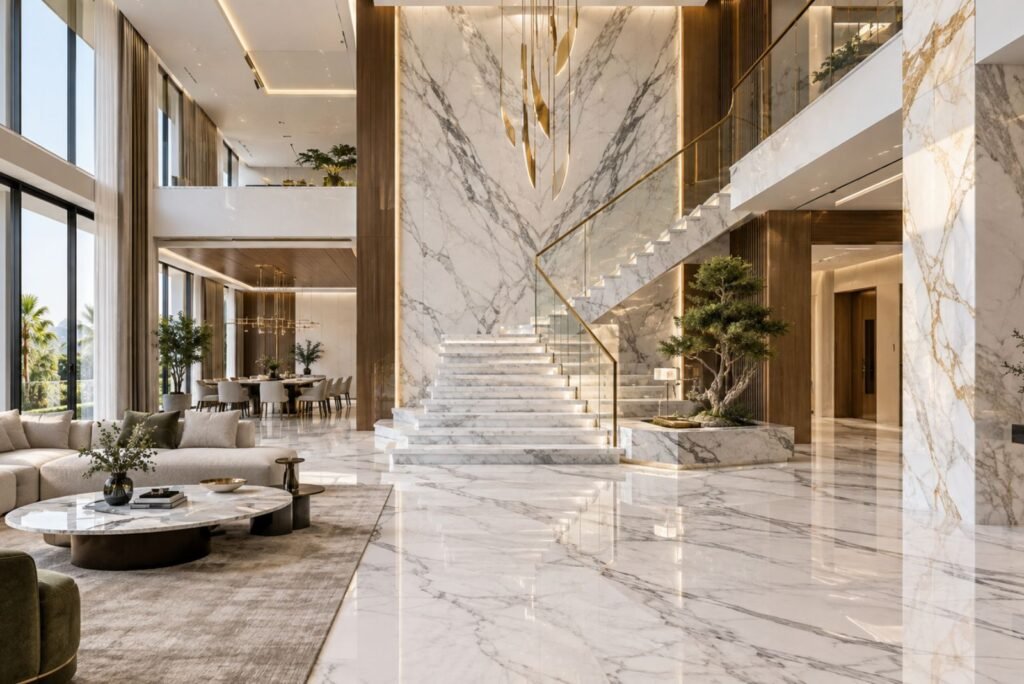
Using the same marble on flooring and stairs can create a continuous appearance, especially in open-plan homes.
However, staircases have a different visual and functional role. The edges, risers, treads and landings need to be considered separately.
If the floor has dramatic veining, using the same slab on every staircase component may produce too much visual movement. In such cases, designers may use:
- The same marble for treads
- A complementary marble for risers
- A plain border around the staircase
- Bookmatched marble on selected vertical surfaces
- A contrasting stone for the handrail area
This creates hierarchy while maintaining coordination.
Slab Selection Is Critical for Staircases
One of the most overlooked aspects of marble design is slab selection.
A sample displayed in a showroom may show only a small portion of the stone. The complete slab can contain considerably more movement than expected.
For stairs, look at the actual slab and decide where its strongest veins should appear.
A long vein running naturally along a tread can create a beautiful visual flow. Poorly planned cutting, however, can make the pattern appear fragmented.
For premium interiors, slab planning should ideally happen before fabrication begins.
Matching Veins Across Multiple Areas
Natural marble is not a printed material. Every block has its own geological pattern. This is precisely what gives natural stone its character.
When marble is used across several surfaces, designers can plan the slabs so that the direction of movement remains visually consistent.
For instance, a staircase leading from a marble-finished entrance to an upper-floor corridor can be designed with attention to vein direction. Instead of treating each stair tread as an isolated piece, the overall movement can be considered as one composition.
This becomes particularly impressive with strongly veined varieties such as Statuario and selected Calacatta materials.
Bookmatching Can Create a Statement Wall
Bookmatching involves placing adjacent marble slabs so that their veining creates a mirrored or continuous visual effect.
It can work especially well for:
- Entrance walls
- Living room feature walls
- Staircase walls
- Reception areas
- Luxury hotel lobbies
- Fireplace backgrounds
But bookmatching should be used selectively. A large patterned wall already has considerable visual impact, so surrounding surfaces usually benefit from a quieter treatment.
Combining Different White Marbles Without Making the Interior Look Patchy
White marble interiors can be extremely elegant, but combining several white stones requires careful attention.
Consider the difference between:
Statuario Marble: strong grey movement and a luxurious visual presence.
Italian Carrara Marble: generally softer grey veining with a more restrained appearance.
Volakas Marble: distinctive patterns that can provide an expressive yet elegant surface.
Thassos White Marble: known for its bright white appearance and ability to create a clean visual field.
Dover White Marble: can be considered when a softer white marble character is desired.
Namibia White Marble: suitable for interiors where a refined light-toned natural stone is part of the design concept.
Pure White Marble: useful where the intention is to maintain a cleaner and simpler appearance.
These materials should not be selected merely because they are all described as white. Their individual characteristics need to complement the architecture.
A Simple Formula for Coordinating Three Surfaces
If you are selecting marble for the floor, wall and staircase, a practical approach is:
1. Choose one dominant marble
Use it on the largest surface, usually the floor.
2. Select one complementary marble
Choose a stone that shares at least one visual characteristic with the dominant marble.
3. Keep the third surface controlled
The staircase or feature wall can either repeat the dominant stone or introduce a quieter complementary material.
This creates a visual relationship without forcing every surface to look exactly the same.
Consider the Lighting Before Finalising Marble
Natural marble can change dramatically depending on lighting.
A marble that appears bright and neutral in daylight may look warmer under artificial lighting. Grey veins can become more pronounced, while subtle beige or gold movement can become more visible.
Always evaluate marble under the type of lighting planned for the final space.
For homes with large windows, check the slabs during daylight. For hotels, showrooms and other commercial spaces, consider both daytime and artificial lighting conditions.
Matte, Polished or Honed Finish?
The finish can influence how different marble surfaces relate to each other.
A polished floor reflects light and can make the room appear brighter and more expansive. A honed or matte finish gives a softer appearance and can reduce visual reflection.
Using different finishes can also create subtle separation.
For example, the same marble may be used in polished form on the floor and with a different finish on selected vertical applications. This maintains material continuity while giving each surface its own character.
Think About the Furniture and Interior Palette
Marble should never be selected in isolation.
Before finalising the stone, look at the:
- Wood tone
- Metal finishes
- Wall paint
- Upholstery
- Curtains
- Lighting temperature
- Cabinet colours
- Decorative elements
If the interior already includes warm wood and brass details, a marble with slight warm movement may integrate naturally.
If the design uses black metal, cool grey furniture and minimalist detailing, a marble with crisp grey veining may create a more coherent appearance.
How Imported Marble Selection Works in Kishangarh
Kishangarh is widely known as a major marble marketplace where buyers can compare a broad range of domestic and imported natural stones.
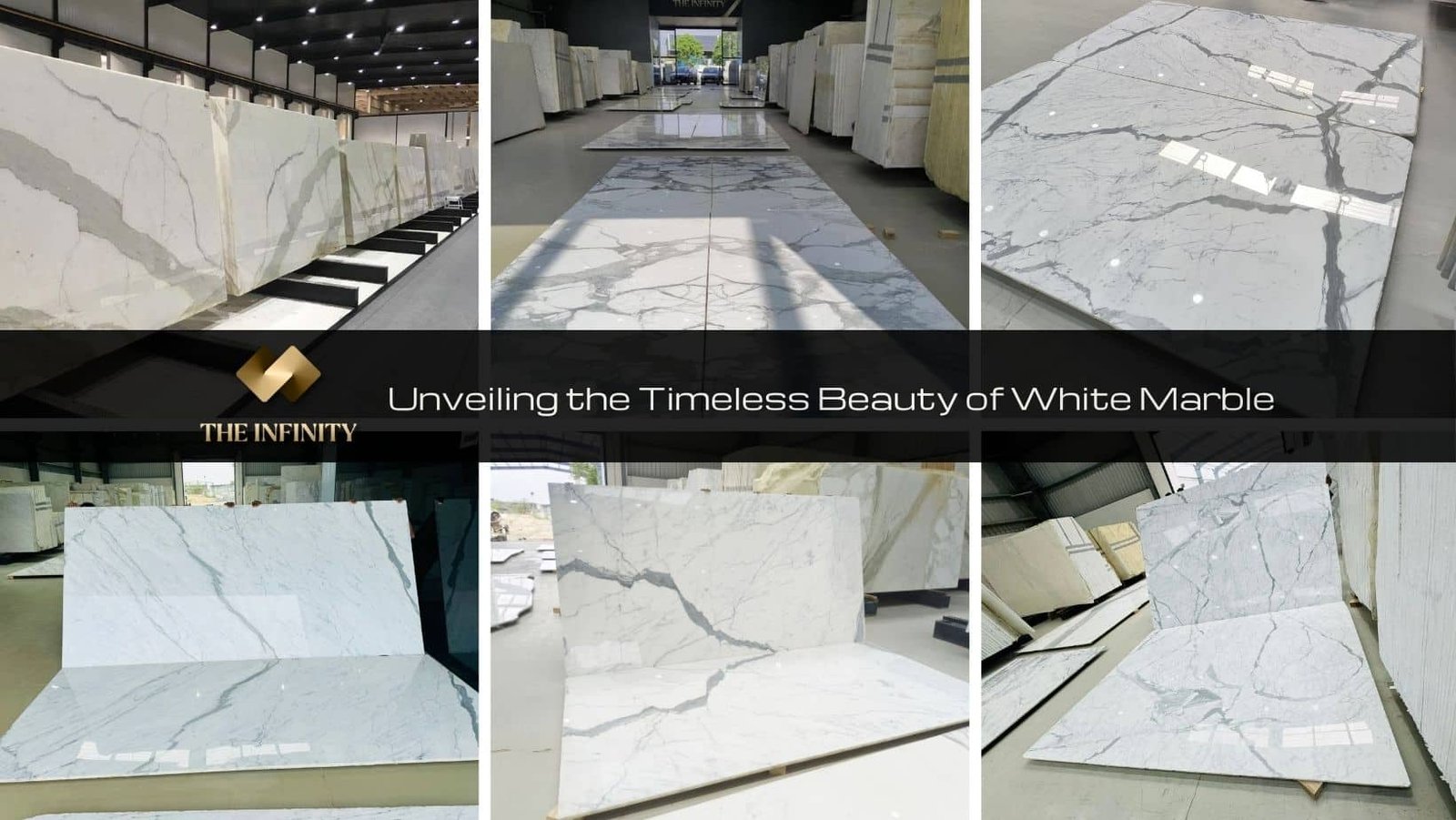
For customers searching for imported marble in Kishangarh, the advantage of visiting a well-stocked marble destination is the ability to compare actual slabs rather than relying only on small samples.
This is particularly useful for premium varieties such as Statuario, Carrara, Volakas, Michelangelo and Calacatta Gold.
When selecting marble, ask to see multiple slabs from the same lot whenever possible. This helps you understand the actual variation before making a purchase.
Why Slab-to-Slab Variation Should Be Expected
Natural stone develops through geological processes over extremely long periods. As a result, two slabs from the same marble variety may not be perfectly identical.
Variation can occur in:
- Vein thickness
- Vein direction
- Background shade
- Crystal structure
- Pattern density
- Small natural marks
Rather than treating these variations as defects automatically, evaluate whether they fit the intended application.
The key is to inspect and approve the actual material before fabrication.
Planning Marble for an Entire Home
If you are building a new home, selecting marble room by room can create an inconsistent appearance.
A better approach is to prepare a material plan covering:
Entrance → Living Room → Dining Area → Staircase → Bedrooms → Bathrooms → Feature Walls
Decide where continuity is important and where contrast is useful.
For example, the same primary marble may continue from the entrance into the living room, while a different marble can be introduced in the staircase or master bathroom.
This gives the property a sense of design continuity without making every room look identical.
When to Use the Same Marble Everywhere
Using one marble throughout the project can be effective when:
- The marble has a relatively controlled pattern.
- The architectural design is minimalist.
- You want strong visual continuity.
- The property has an open floor plan.
- Furniture and décor already provide enough contrast.
In such projects, the marble becomes the common thread connecting different spaces.
When Mixing Marbles Makes More Sense
A combination of marbles may work better when:
- The home has several architectural zones.
- You want a feature staircase.
- A large wall needs visual emphasis.
- The floor has very strong veining.
- Different rooms have different design themes.
The trick is to establish a relationship between the stones through colour, undertone, scale or vein character.
Common Marble Matching Mistakes to Avoid
Choosing From Small Samples Alone
Small samples cannot always represent the full slab. Always inspect larger pieces before approving a premium marble.
Mixing Too Many Dramatic Patterns
Several highly veined stones in the same visual zone can compete for attention.
Ignoring Vein Direction
A beautiful marble can look poorly planned if the direction of its veins changes randomly across adjoining surfaces.
Matching Only the Base Colour
Two stones may both appear white but have completely different undertones.
Forgetting Staircase Proportions
Staircases expose marble from multiple viewing angles, so pattern planning becomes particularly important.
Leaving Slab Planning Until Fabrication
For strongly patterned marble, cutting decisions should be made with the final design in mind.
Working With Premium Marble in Kishangarh
For buyers looking for white marble in Kishangarh or Italian marble in Kishangarh, the selection process should involve more than comparing prices.
Look at the actual slabs, understand the available quantity, discuss cutting requirements and consider where each slab will be used.
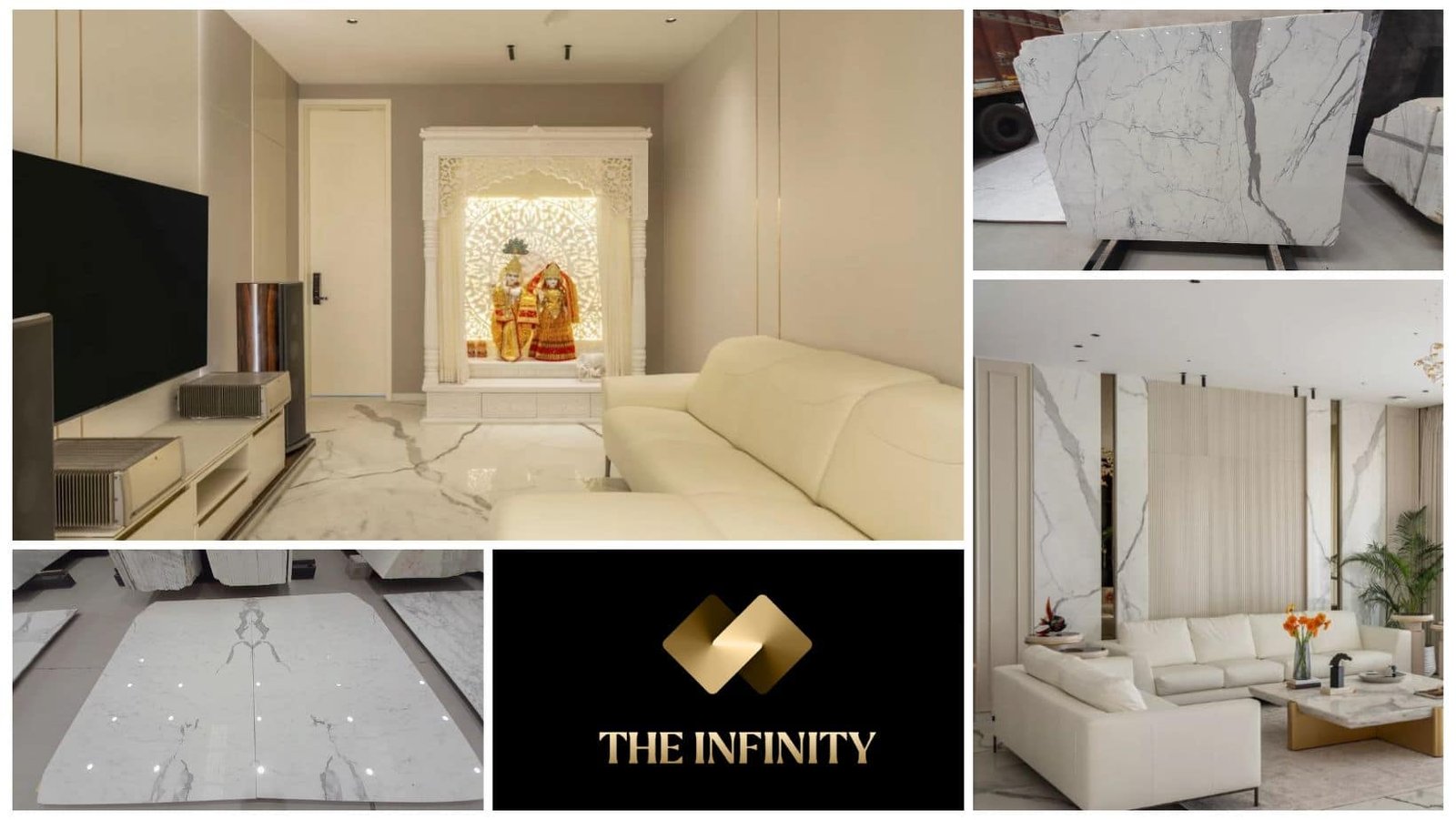
At The Infinity Marble by Bhandari Marble Group, customers can explore premium marble varieties and compare different natural stone appearances for residential and commercial applications.
The collection can include options such as Statuario Marble, Carrara Marble, Volakas Marble, Michelangelo Marble, Calacatta Gold Marble, Thassos White Marble, Dover White Marble, Namibia White Marble and Pure White Marble.
The right choice ultimately depends on the architecture, desired appearance, available slab selection and the way the material will be fabricated.
A Practical Checklist Before Ordering Marble
Before confirming your marble, check:
- Does the background tone suit the interior?
- Do the veins work with the furniture and wall colours?
- Have you inspected the actual slabs?
- Is there enough material for the complete project?
- Have staircase cuts been planned?
- Will the marble direction remain consistent?
- Have you considered natural variation?
- Does the finish suit the application?
- Have you checked the stone under your intended lighting?
- Will different marble varieties look connected when placed together?
Answering these questions before purchase can save significant time and reduce fabrication surprises.
The Infinity Marble for Marble Selection in Kishangarh
Selecting marble for a luxury project is ultimately about creating a relationship between material, architecture and craftsmanship.
Whether the project calls for Statuario Marble in Kishangarh, imported marble, Italian marble, white marble or a combination of premium natural stones, the complete slab should be considered rather than making the decision from colour alone.
The Infinity Marble by Bhandari Marble Group provides access to a wide range of marble choices for customers looking to plan floors, walls, staircases and other architectural surfaces.
For project enquiries and marble selection assistance, customers can contact the team at +918980000111 or bhandarimarblegroup@gmail.com.
A thoughtfully coordinated marble scheme can make separate surfaces feel like one complete architectural composition—and that is often what turns a beautiful material selection into a truly refined interior.
Frequently Asked Questions
Can I use different types of white marble in the same house?
Yes. Different white marbles can be combined successfully when their undertones, vein patterns and visual intensity are considered together. The goal is coordination rather than making every surface identical.
Is Statuario Marble suitable for both floors and staircases?
Statuario Marble can be used for several interior applications, including flooring and staircase elements, depending on the specific material, fabrication requirements and project conditions. Strong veining makes slab planning especially important.
Should staircase marble match the flooring exactly?
It does not have to. Matching the staircase with the floor can create continuity, while a complementary marble can make the staircase more distinctive. The choice depends on the architectural design.
How many marble varieties should be used in one interior?
There is no universal number. However, limiting the main visual palette helps maintain a coherent appearance. If several marbles are used, they should have a clear relationship through colour, pattern or finish.
How can I avoid mismatched marble veins?
Inspect the complete slabs before fabrication and plan the cutting layout in advance. For prominent areas such as feature walls and staircases, discuss vein direction and slab positioning with the fabricator before cutting.
Does lighting affect the appearance of natural marble?
Yes. Daylight and artificial lighting can change how the marble’s background and veins appear. It is useful to view the material in lighting conditions similar to those in the finished space.
Is Carrara Marble a good choice with Statuario Marble?
The two can potentially work together because both can offer white-to-light backgrounds with grey veining. The exact combination should be judged from the actual slabs because pattern intensity can vary considerably.
Can Thassos White Marble be combined with heavily veined marble?
Yes. Its clean appearance can provide visual breathing space around a more expressive marble. This can be useful for feature walls, borders or selected architectural details.
What should I check before buying imported marble in Kishangarh?
Check the actual slab appearance, dimensions, thickness, finish, natural variation, quantity available and whether sufficient material exists for your project. Also consider how the slabs will be cut and installed.
Why is complete slab viewing important for premium marble?
A small sample shows only a limited section of the stone. The full slab reveals the actual vein movement, background variation and overall pattern, allowing you to make a more informed design decision.
Can the same marble be used in floors, walls and stairs?
Yes, when the marble is suitable for the intended applications and the design calls for continuity. However, different finishes, cutting patterns or complementary materials can sometimes create a more balanced result.
What is the best way to coordinate marble throughout a luxury home?
Start with the largest surfaces, establish a primary marble, select complementary materials for feature areas and plan the slabs before fabrication. Keep the overall colour and vein language consistent while allowing selected spaces to have their own identity.