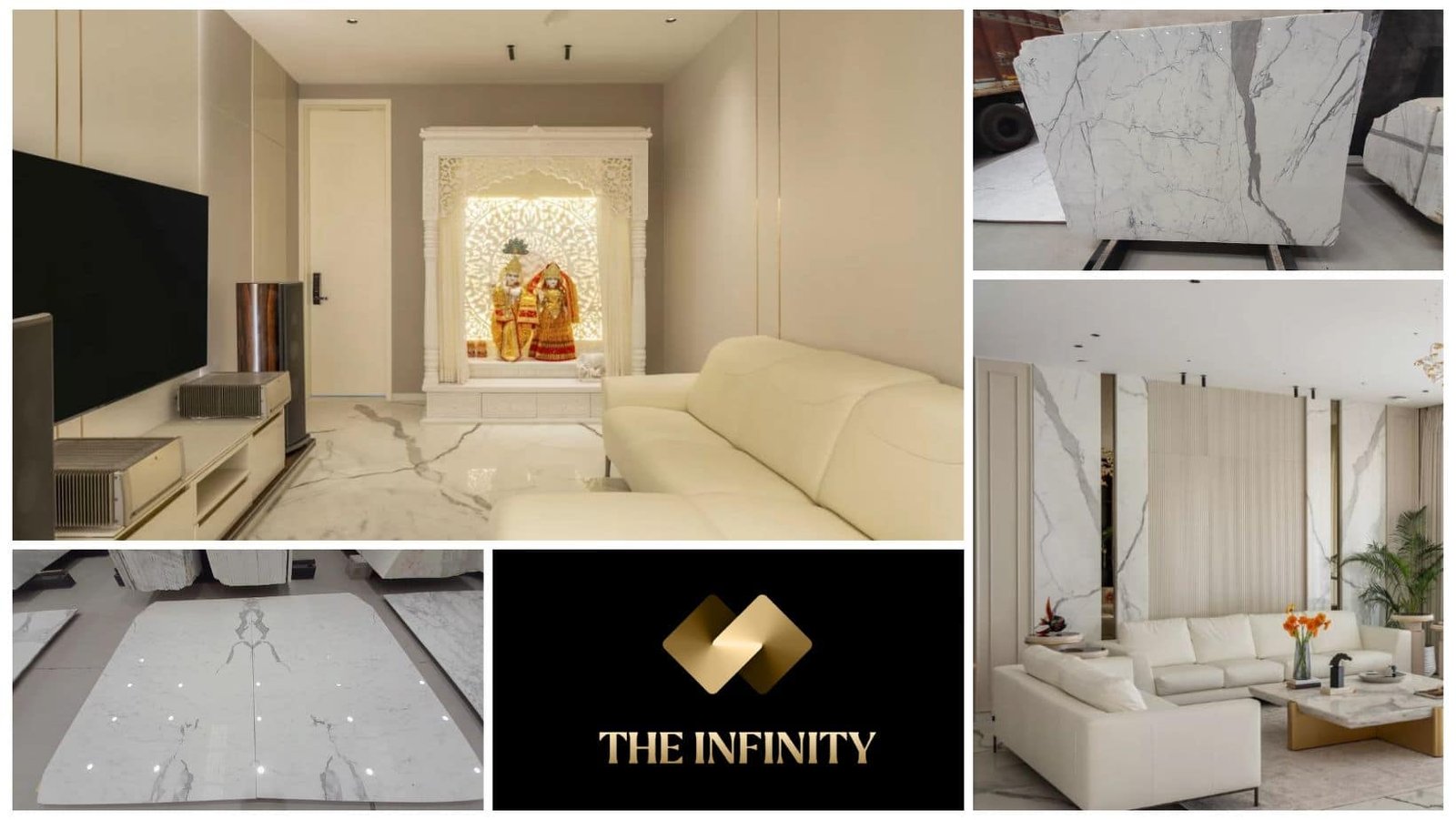
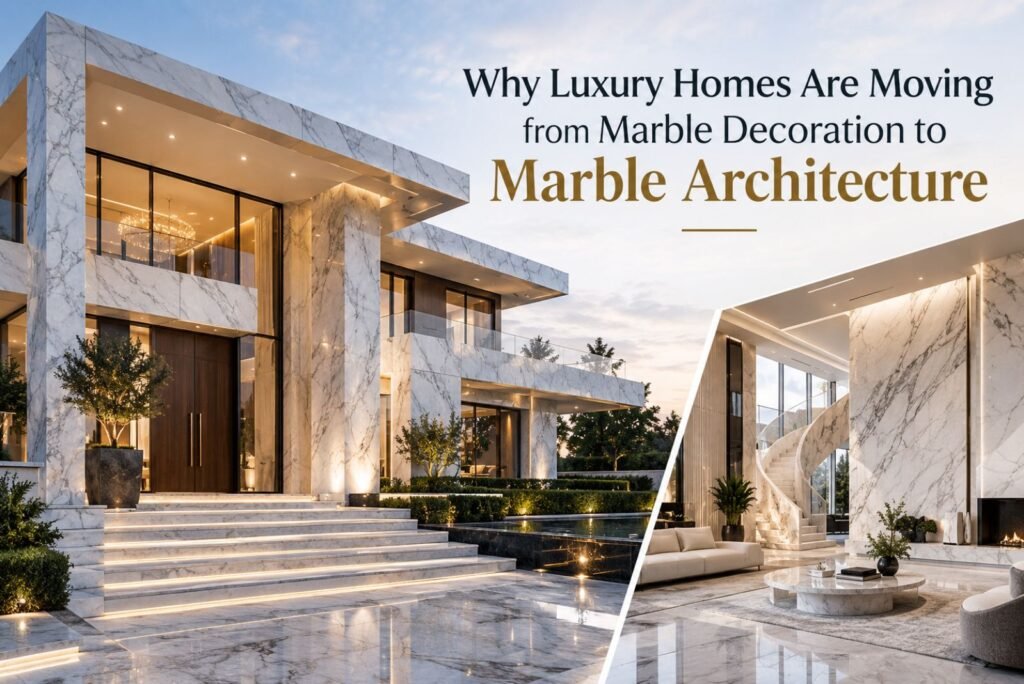
Luxury interiors are changing. Marble is no longer being used only as a decorative material for flooring, countertops, staircases, or small feature areas. In high-end homes, architects and interior designers are increasingly treating marble as an architectural element that can define the character of an entire space.
This shift from marble decoration to marble architecture is especially visible in luxury residences where natural stone is planned from the beginning of the design rather than added as a finishing material.
Instead of asking, “Where can marble be used?” designers are asking, “How can marble shape the space?”
That change has opened up new possibilities for materials such as Statuario Marble, Carrara Marble, Volakas Marble, Michelangelo Marble, Calacatta Gold Marble, Thassos White Marble, Dover White Marble, Namibia White Marble, and Pure White Marble.
For homeowners sourcing premium stone from The Infinity Marble by Bhandari Marble Group, this architectural approach also makes stone selection more important because the appearance, veining, thickness, finish, and slab continuity can influence the complete interior.
What Is Marble Architecture?
Marble architecture means using natural stone as part of the architectural identity of a building or interior.
Traditional marble decoration may involve installing marble after the main design has already been decided. Marble architecture takes a different approach. The stone becomes part of the design concept itself.
It can be used for:
- Full-height feature walls
- Sculptural staircases
- Statement fireplaces
- Bookmatched wall panels
- Curved architectural surfaces
- Marble ceilings and soffits
- Bathroom walls and integrated vanities
- Entrance features
- Large-format flooring compositions
- Kitchen islands and dramatic countertops
- Columns and architectural partitions
The objective is not simply to make a room look expensive. It is to create visual continuity between architecture, material, light, and space.
Why Are Luxury Homes Choosing This Approach?
Marble Can Define an Entire Room
A carefully selected marble wall can establish the colour palette and mood of a room before furniture and accessories are introduced.
For example, a white marble with expressive grey veining can create a sophisticated backdrop in a living room, while a warmer stone with golden movement can bring a more dramatic character to a formal area.
This makes marble much more than a surface covering.
Large Slabs Create a More Continuous Look
Modern luxury interiors often favour fewer visual interruptions. Large marble slabs can help achieve this by reducing unnecessary joints.
When the veining is carefully matched, adjacent slabs can create a bookmatched or flowing composition. This is particularly effective on feature walls, fireplace surrounds and statement bathroom interiors.
The result feels intentional rather than simply installed.
Statuario Marble in Kishangarh for Architectural Interiors
Statuario Marble in Kishangarh has become a popular consideration for luxury projects because of its distinctive white background and expressive grey veining.
Its visual character can work particularly well in spaces where the marble needs to become a focal point.
Rather than using Statuario Marble only for flooring, designers may incorporate selected slabs into:
- Living room feature walls
- Entrance backdrops
- Luxury bathrooms
- Staircase walls
- Fireplace surrounds
- Kitchen islands
- Decorative partitions
For large architectural applications, slab selection becomes critical. Two slabs from the same marble category may have noticeably different veining patterns, so the stone should be selected according to the intended design rather than by name alone.
Imported Marble in Kishangarh Is Supporting More Personalised Designs
Kishangarh has developed into a major destination for natural stone sourcing, giving architects and homeowners access to a broad range of domestic and imported materials.
The availability of imported marble in Kishangarh allows designers to compare different backgrounds, vein structures, finishes and visual personalities in one sourcing environment.
This is particularly useful for luxury residences because a project may require different types of marble for different architectural purposes.
A calm white stone might be appropriate for bedrooms, a stronger veined marble for the living room, and a warmer material for a formal dining area.
From Flooring to Full-Height Walls
One of the clearest changes in luxury interiors is the increasing use of marble vertically.
A floor can make a room elegant, but a full-height marble wall can become its architectural identity.
Designers are using continuous stone surfaces behind televisions, fireplaces, beds, staircases and bathroom fixtures. This creates a stronger connection between the architecture and the natural pattern of the stone.
In contemporary homes, this can also reduce the need for excessive decorative elements.
Bookmatching Turns Veining into Design
Bookmatching is another reason marble is moving into architectural applications.
Two slabs are positioned so their patterns mirror one another, creating a symmetrical visual composition. When the veining is suitable, this can transform a natural stone wall into something resembling a large-scale piece of artwork.
However, successful bookmatching depends on more than simply placing two slabs together. The vein direction, slab sequence, colour consistency, cutting plan and installation must all be considered before fabrication.
This is why experienced stone selection matters for high-value projects.
Different Marble Types Create Different Architectural Moods
There is no single “luxury marble.” Different stones create completely different atmospheres.
Italian Carrara Marble can offer a softer and more understated appearance, making it suitable for elegant contemporary and classic interiors.
Volakas Marble is often considered where designers want a bright white appearance with distinctive natural movement.
Michelangelo Marble can be selected for projects seeking a sophisticated statement surface.
Calacatta Gold Marble brings stronger visual drama through its combination of white backgrounds and warmer veining.
Thassos White Marble is valued for projects where a cleaner and brighter white appearance is desired.
Dover White Marble, Namibia White Marble, and Pure White Marble can also be considered when the design requires different interpretations of white natural stone.
The right choice depends on the project’s lighting, scale, furniture, architecture and desired atmosphere—not simply on which marble has the highest price.
Why White Marble Remains Important in Luxury Architecture
White marble continues to have a strong position in luxury residential design because it can make interiors feel spacious, refined and visually connected.
However, modern designers are becoming more selective about what “white marble” means.
Some projects need an almost uniform white background. Others benefit from prominent grey veins or warmer movement.
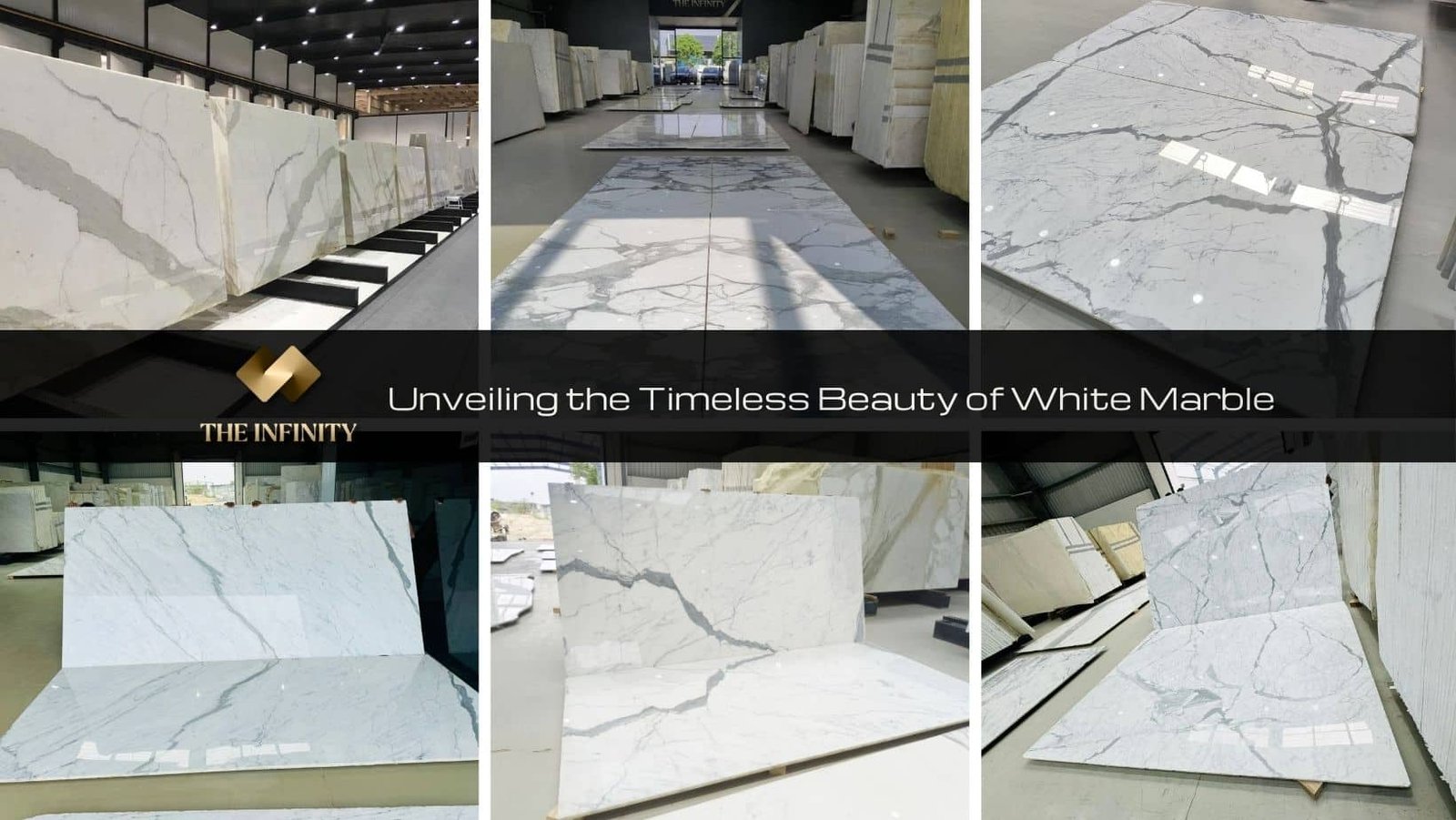
This is why buyers looking for white marble in Kishangarh should examine actual slabs rather than relying only on photographs or material names.
Natural stone is inherently variable, and that variation is part of its character.
Marble Is Being Designed Around Natural Light
Lighting has become an important part of architectural marble design.
The same slab can appear different under daylight, warm artificial lighting and focused architectural illumination. Veins can become softer or more prominent depending on the direction and intensity of light.
For this reason, luxury projects often consider marble and lighting together.
A backlit translucent stone can create an entirely different experience from a heavily polished opaque marble surface. Similarly, directional lighting across a veined wall can emphasise the natural movement of the stone.
The Importance of Slab Selection
When marble is used architecturally, selecting the right slab becomes more important than simply choosing a marble category.
Architects and homeowners should consider:
- Background colour
- Vein intensity
- Vein direction
- Slab dimensions
- Natural variation
- Surface finish
- Thickness
- Matching requirements
- Installation location
- Expected wastage
- Fabrication requirements
For a large feature wall, a slab with beautiful veining may be more valuable than several slabs with an average pattern.
The objective is to select stone that works with the design rather than forcing the design around whatever slabs are available.
Why Architects Prefer Planning Marble Earlier
Architectural marble requires coordination between several stages of a project.
The architect, interior designer, stone supplier, fabricator and installer may need to coordinate slab selection, measurements, cutting patterns and installation sequences.
Planning early can help avoid problems such as:
- Unwanted vein breaks
- Poor slab matching
- Excessive joints
- Incorrect vein direction
- Unexpected material shortages
- Difficult fabrication
- Higher wastage
This is one reason premium residential projects increasingly involve the marble supplier during the design-development stage rather than only after construction is underway.
The Infinity Marble by Bhandari Marble Group
For luxury projects, The Infinity Marble by Bhandari Marble Group provides access to a range of natural stone options for architects, designers, builders and homeowners.
The focus should not only be on finding a particular marble name. A better approach is to match the stone to the architectural requirement—whether that means sourcing Italian Marble in Kishangarh, imported marble, statuario marble or a specific white marble for a carefully planned interior.
For project enquiries and marble selection assistance, contact:
The Infinity Marble by Bhandari Marble Group
Phone: +918980000111
Email: bhandarimarblegroup@gmail.com
Marble Architecture Is About Creating Identity
Luxury homes are moving beyond the idea that expensive materials automatically create luxury.
Today, thoughtful design matters more.
A single beautifully selected marble wall can have greater impact than marble being placed randomly throughout an entire house. The strongest interiors use natural stone with purpose—considering proportion, pattern, light, geometry and the surrounding materials.
That is the real difference between marble decoration and marble architecture.
Marble decoration adds a premium surface.
Marble architecture makes the stone part of the space’s identity.
FAQs About Marble Architecture in Luxury Homes
Is marble architecture only suitable for very large houses?
No. The concept can work in apartments, villas and compact luxury homes as well. The key is choosing one or two meaningful architectural applications instead of covering every surface with marble.
Should I choose the marble before finalising the interior design?
For major marble features, early selection is usually beneficial. The colour and veining of a large stone surface can influence wall colours, furniture, lighting and other finishes.
How do I choose between subtle and heavily veined marble?
Think about the role of the surface. A highly active marble can become the focal point of a room, while a quieter stone may work better where furniture, artwork or architectural forms are already visually strong.
Does bookmatching increase marble wastage?
It can. Bookmatching requires careful slab planning and cutting, and the usable area may be affected by the desired vein alignment. A cutting layout should be discussed before purchasing slabs.
Is Statuario Marble suitable for more than flooring?
Yes. Depending on the selected slab and application, Statuario Marble can be used for walls, bathrooms, fireplaces, stairs, countertops and other architectural features.
What should I check when buying imported marble in Kishangarh?
Look beyond the marble name. Check the actual slab’s colour, veining, dimensions, thickness, surface quality, consistency between slabs and whether the material suits your project’s fabrication requirements.
Can different marble types be used in the same luxury home?
Absolutely. Using different stones can actually create a more layered interior. The important part is maintaining a visual relationship between their colours, textures and vein patterns.
Why does the same marble look different in different homes?
Lighting, surrounding colours, polish, slab selection, installation direction and camera exposure can all change how natural stone appears. Viewing physical slabs in suitable lighting is therefore valuable before making a final decision.
What makes a marble wall look architectural instead of decorative?
Proportion and integration are key. When the marble is designed around the room’s geometry, openings, lighting, furniture and architectural lines, it becomes part of the structure’s visual language rather than an isolated decorative panel.
Is expensive marble automatically better for a luxury project?
Not necessarily. A premium project needs the right stone, not simply the most expensive stone. A marble with the right pattern, scale and colour can create a stronger result than a costlier material that does not suit the architecture.